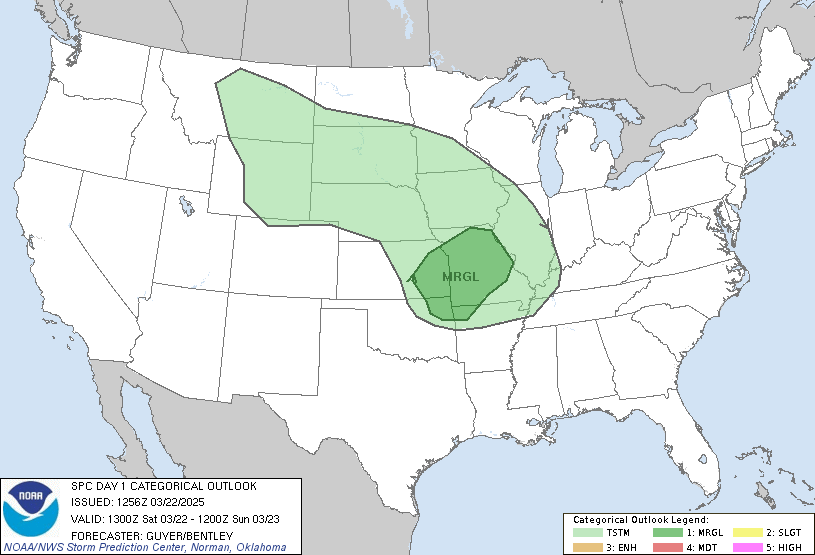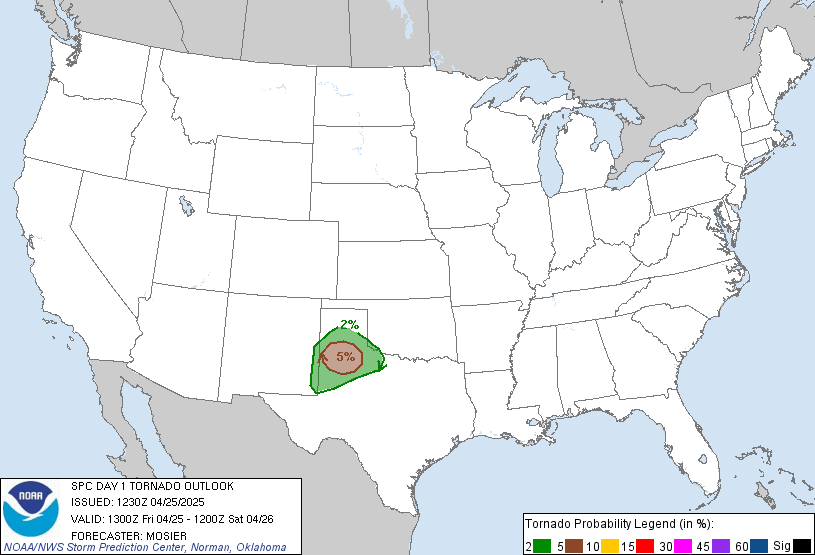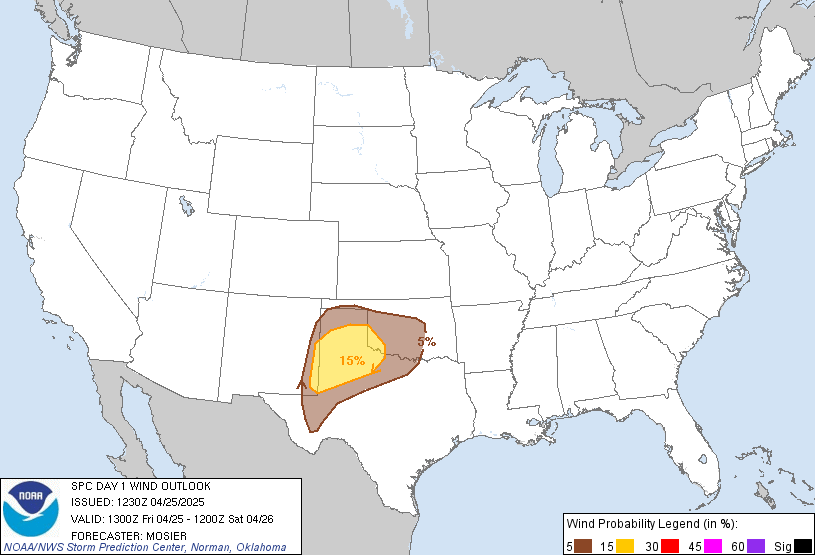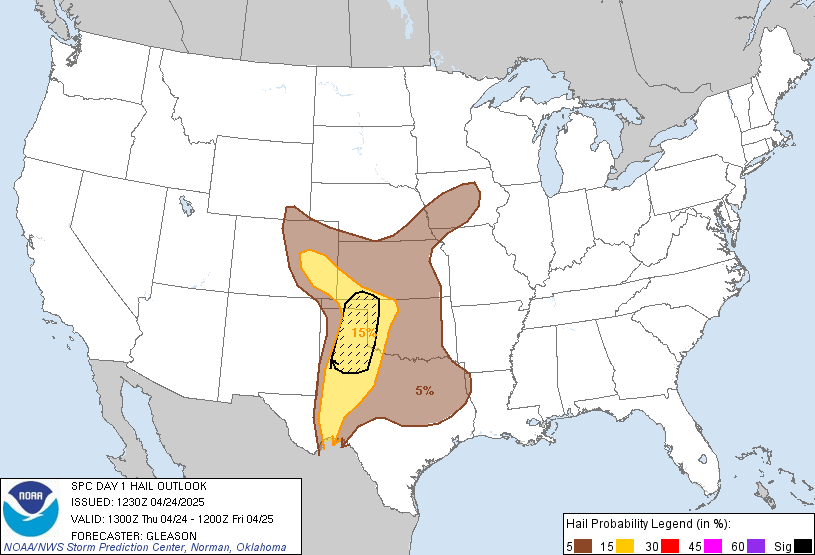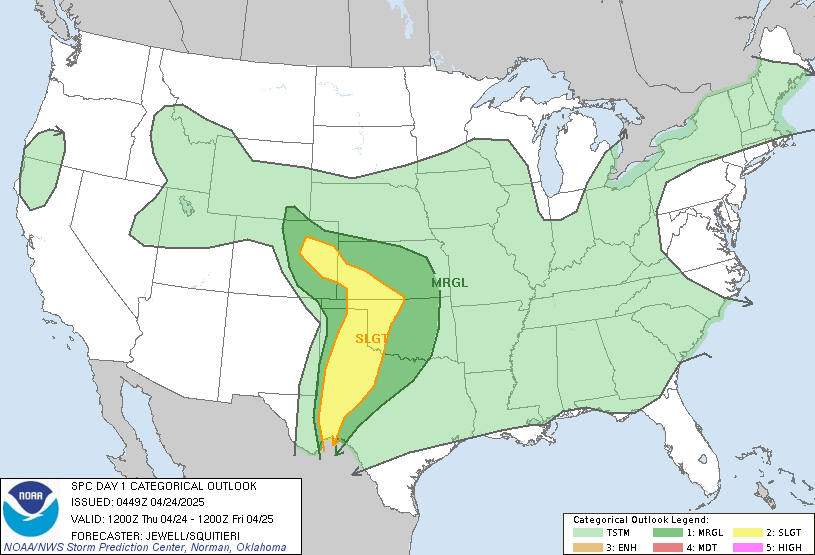
Day 1 Convective Outlook
NWS Storm Prediction Center Norman OK
1026 AM CST Wed Mar 04 2026
Valid 041630Z - 051200Z
...THERE IS A SLIGHT RISK OF SEVERE THUNDERSTORMS FROM NORTH
TEXAS/EASTERN OKLAHOMA TO OZARKS AND LOWER OHIO VALLEY...
...SUMMARY...
Isolated to scattered severe thunderstorms are expected through
tonight from north-central Texas and eastern Oklahoma to the Ozarks
and Lower Ohio Valley. Large hail, localized wind damage, and a
tornado or two are possible.
...Southern Plains to the Ozarks and Lower Ohio Valley...
Well in advance of an amplifying trough over the Great Basin, a
low-amplitude southern-stream shortwave trough over the
south-central High Plains will continue east-northeastward over the
Lower Missouri Valley through tonight. A base-embedded modestly
increasing belt of southwesterly mid-level flow (50+ kt) will
maximize from northeast Oklahoma/southeast Kansas across the Ozarks,
in general proximity to a weak surface low/frontal zone across the
region where deep-layer/low-level shear are expected to be
maximized.
South of the front, southerly low-level flow will support dewpoints
climbing into generally the low to mid 60s F. While cloud cover may
remain semi-prevalent across the warm sector, this increasing
moisture beneath steep mid-level lapse rates amid filtered daytime
heating should support MLCAPE values generally around 1000-1500 J/kg
in a narrow corridor along/ahead of the front. Locally greater
instability should develop across north-central into central Texas
where stronger daytime heating is expected, although
deep-layer/low-level shear will be notably weaker, while still
sufficient for relatively isolated severe storms.
Across most of the Slight Risk area, effective bulk shear of 35-50
kt will easily support organized convection regionally, although
convective mode may tend to be somewhat messy given broad ascent
within the modest low-level warm advection regime near the surface
front. Additionally, ongoing mostly elevated convection this morning
across northeast Oklahoma into southern Missouri and southern
Illinois may hamper stronger heating and limit destabilization
downstream, with outflow/existing convection contributing to modal
complexity later today.
Even with these potential limitations, a broad area of isolated to
scattered severe thunderstorm potential exists through tonight. An
isolated and/or occasional hail threat may persist with ongoing
elevated convection from southern Missouri into southern
Indiana/northern Kentucky. Surface-based thunderstorm development
should otherwise become more probable across the Ozarks into
mid/late afternoon closer to the surface front/surface low and
modifying outflow. A mix of supercells and clusters will pose a risk
for large hail. Damaging winds will also be possible where steepened
low-level lapse rates can develop with daytime heating. Although
low-level flow is not forecast to become overly strong, there should
be sufficient 0-1 km SRH to support some threat for a couple of
tornadoes with any sustained supercells/clusters, particularly
across southern Missouri and northern Arkansas.
..Guyer/Wendt.. 03/04/2026
Read more CHECK UPDATE ZOOM GRAPHIC
http://dlvr.it/TRJ4Yz