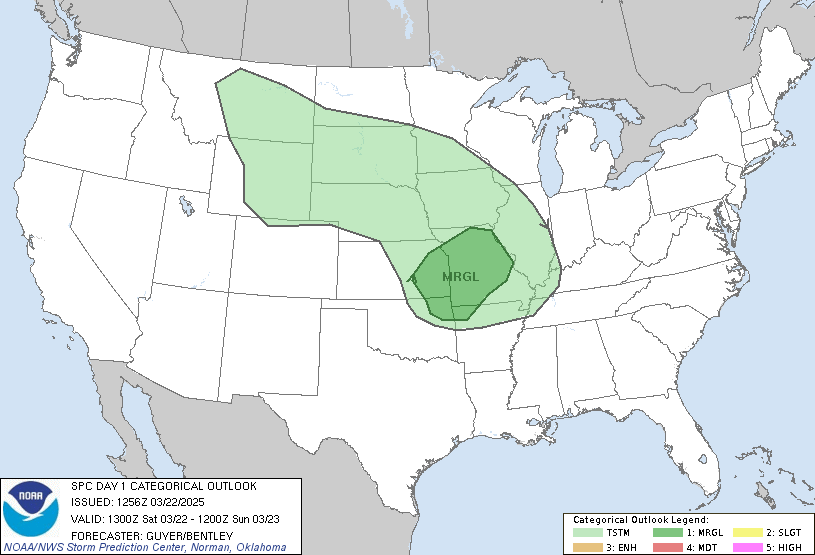
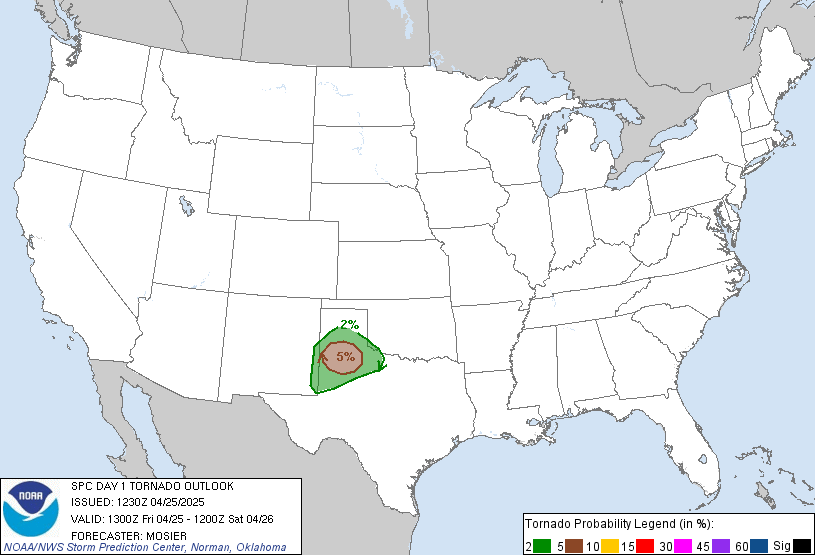
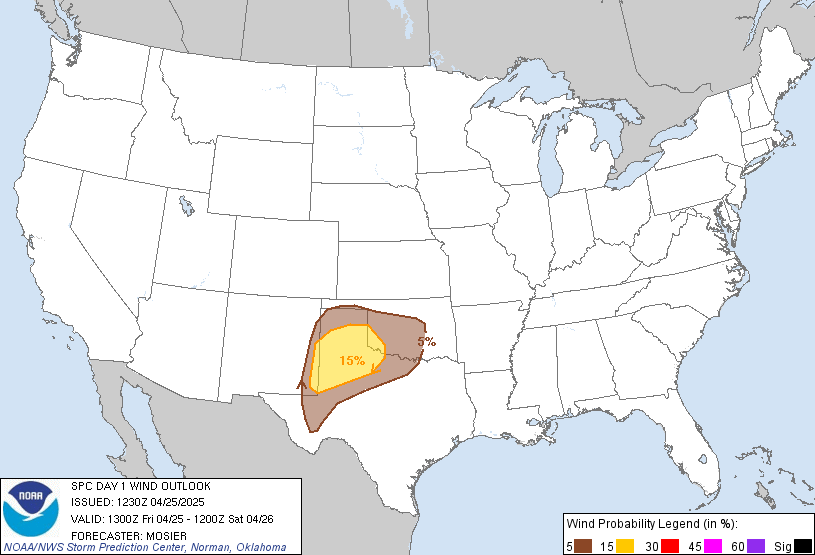
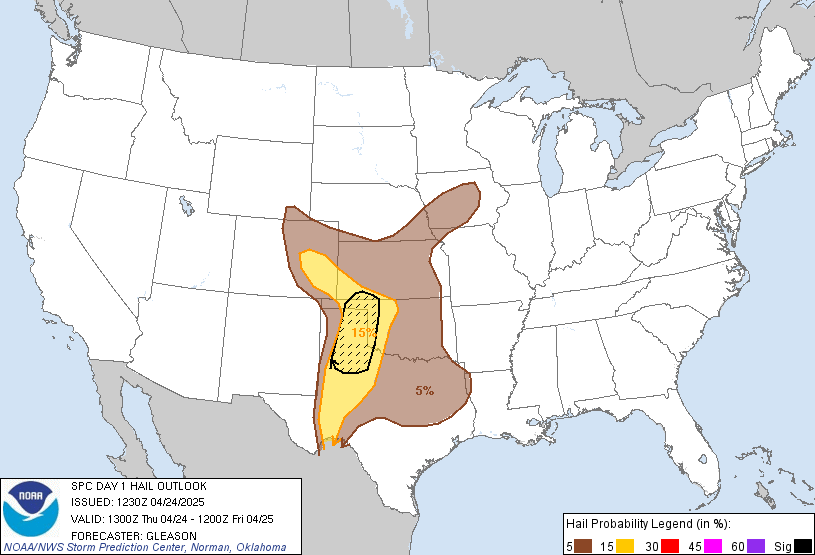
Day 1 Convective Outlook
NWS Storm Prediction Center Norman OK
1242 AM CDT Mon May 11 2026
Valid 111200Z - 121200Z
...THERE IS A MARGINAL RISK OF SEVERE THUNDERSTORMS FROM THE COASTAL
CAROLINAS INTO THE FLORIDA PENINSULA...AND ALONG THE CENTRAL GULF
COAST...
...SUMMARY...
Isolated severe storms with locally damaging wind gusts and hail are
possible Monday afternoon from the coastal Carolinas into the
Florida Peninsula, and along the central Gulf Coast.
...Synopsis...
Within the base of broader-scale troughing over eastern North
America, a lead short-wave trough will progress from the TN Valley
through the Carolinas on Monday, in tandem with a mid-level jet
streak. Farther to the southwest, a vorticity maximum over western
TX as of late evening is expected to progress east through the
Sabine River Valley to along the central Gulf Coast Monday afternoon
into Monday night. Elsewhere, a strong short-wave trough and
attending mid/upper-level wind maxima will crest the western U.S.
ridge axis along the International Border before turning more
southeast into the northern Plains and upper MS Valley Monday night
into Tuesday morning.
At the surface, a cold front will settle south through the lower MS
Valley and Southeast with low pressure developing along the boundary
over coastal SC or far southeast NC by early afternoon. Elsewhere,
an area of low pressure will track east-southeast through southern
parts of Saskatchewan and Manitoba with an associated cold front
sweeping southeast through the northern High Plains. A trough will
precede the cold front with that feature shifting east into the
central Dakotas by early evening.
...Coastal Carolinas into the eastern Florida Peninsula...
Latest model guidance is suggestive that surface-based thunderstorm
development may occur as early a mid to late morning along or ahead
of the cold front from the SC piedmont into the coastal plain as
forcing for ascent increases downstream from the approaching
short-wave trough. Subsequent storm development is also expected
farther northeast along the front into southeast NC by late morning
into early afternoon.
Even with the relatively early storm development, forecast soundings
indicate the presence of a moderately unstable warm sector with
MLCAPE approaching 1500 J/kg. Vertical shear will steadily increase
with the arrival mid-level jet streak, such that some transient
supercell structures may evolve, especially in the vicinity of the
weak surface low. The strongest storms will be capable of isolated
occurrences of damaging winds and marginally severe hail into mid
afternoon before moving offshore. Generally weak low-level shear
should limit tornado potential.
Additional strong to marginally severe storms appear possible along
the cold front, as well as the Atlantic Coast sea breeze from
southeast GA southward into the Fl Peninsula. The combination of a
moist and moderately unstable air mass (MLCAPE of 1500-2500 J/kg)
with 30-40 kt of effective bulk shear will be supportive of some
storm organization with an attendant risk for damaging, wet
microbursts and perhaps some marginally severe hail.
...Central Gulf Coast...
Increased forcing for ascent associated with the short-wave trough
moving into the Sabine River Valley is expected to contribute to an
increase thunderstorm development Monday afternoon across southern
parts of LA and MS, potentially into southwest AL. A moist and
moderately unstable air mass will coincide with 30-35 kt of
effective bulk shear, with the 00z convection-allowing models
suggesting some potential for cold pool organization along the
coast. The primary hazard is expected to be locally damaging outflow
winds.
...Northern Plains into Upper Mississippi Valley...
A plume of steep, mid-level lapse rates (7.5-8.5 C/km) will
overspread the northern Plains Monday, downstream from the
approaching short-wave trough. The boundary-layer ahead of the
pre-frontal trough will remain rather dry with dewpoints in the 30s
to perhaps low/mid 40s, which in turn will limit MLCAPE to 200-300
J/kg. Strong, diurnal heating in the vicinity of the surface trough
coupled with increasing height falls aloft may be sufficient to
support isolated, high-based thunderstorms by late afternoon into
early evening with the potential for locally strong wind gusts.
Thunderstorms may tend to increase in areal coverage later Monday
evening into Monday night across the upper MS Valley, aided by a
nocturnally strengthening low-level jet. By that time, the
convection is likely to be elevated and capable of small hail.
No wind/hail probabilities will be assigned to the area at this
time. However, model trends will be monitored for greater air mass
destabilization, which could warrant 5% probabilities and a level
1/Marginal Risk.
..Mead/Weinman.. 05/11/2026
Read more CHECK UPDATE ZOOM GRAPHIC
http://dlvr.it/TSTGwY