Day 1 Convective Outlook
NWS Storm Prediction Center Norman OK
0736 AM CDT Fri Apr 10 2026
Valid 101300Z - 111200Z
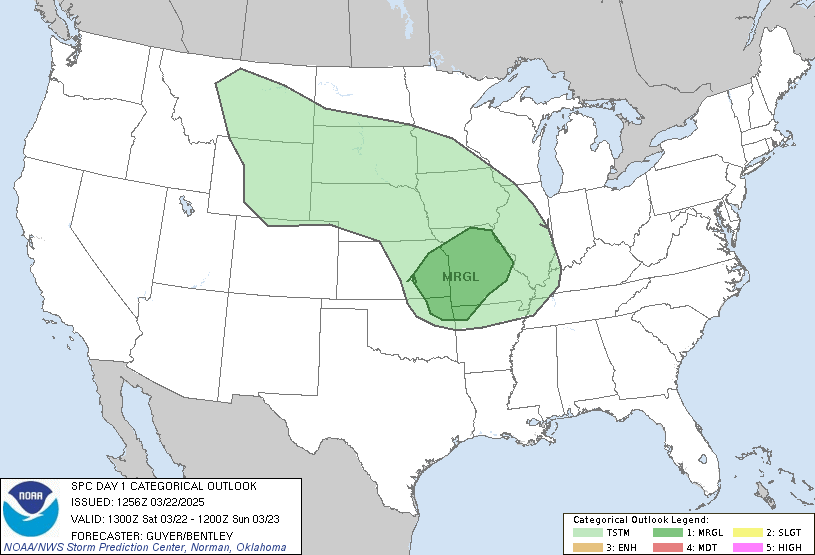
...THERE IS A MARGINAL RISK OF SEVERE THUNDERSTORMS ACROSS PARTS OF
THE SOUTH-CENTRAL PLAINS/OZARKS AND NORTHERN CALIFORNIA/GREAT
BASIN...
...SUMMARY...
Thunderstorms with isolated large hail and severe gusts are possible
this afternoon and evening across parts of the south-central Plains
to the Ozarks. Strong to locally severe storms may also occur from
western/northern Nevada into southeast Oregon and southwest Idaho,
and also across parts of north-central California.
...South-central Plains/Ozarks...
Scattered rain and generally weak thunderstorms will continue to
accompany and reinforce a southward-shifting front, with the
boundary stalling today, before starting to shift back northward
late tonight. Weakening flow aloft will occur today in the presence
of a building upper ridge and corresponding height rises. As
outflows dissipate, ample heating/mixing is expected later today to
the south of the front, where MLCAPE values may exceed 1500 J/kg
across Oklahoma/Texas Panhandle and northeast New Mexico.
Even with modest overall forcing for ascent, scattered thunderstorms
are expected to develop by late afternoon in the vicinity of the
boundary across parts of far southern Kansas/northern Oklahoma into
the Ozarks, with additional development possible near the front, and
also within a post-frontal regime across the south-central High
Plains vicinity.
With rather modest large-scale ascent and weak deep-layer flow
across the region, storm organization and duration may generally
remain somewhat limited. However, more organized cells may briefly
develop on an isolated basis more immediately near the boundary,
where some enhancement to effective shear/SRH will be possible.
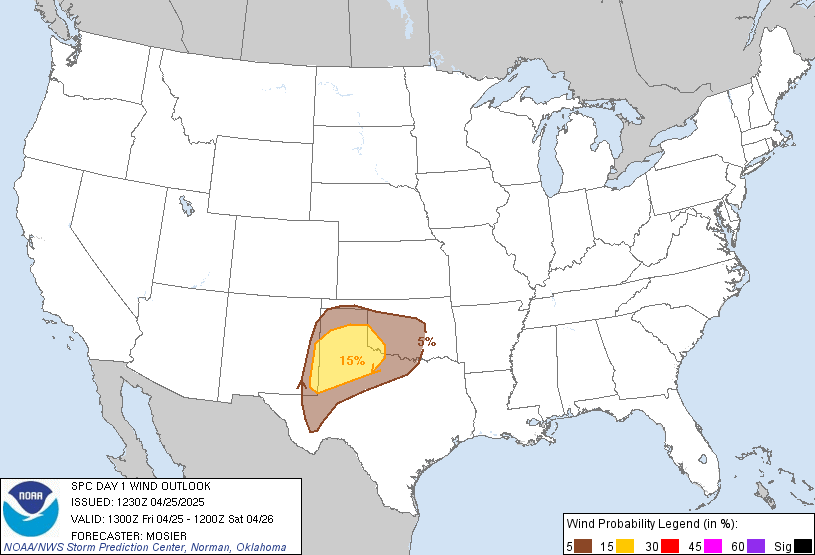
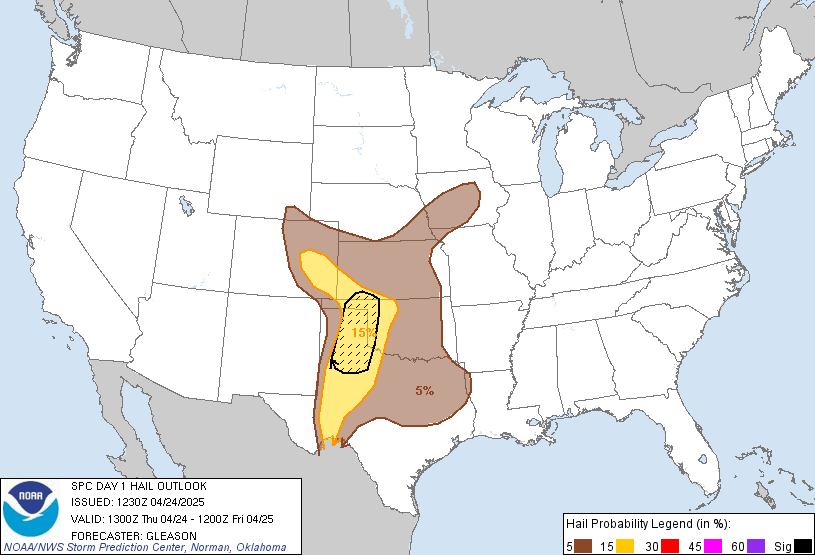
Isolated large hail appears to be the most likely hazard, although
localized strong/damaging wind gusts could also occur.
...Nevada/southeast OR/southwest ID and north-central CA...
A closed upper low off the coast of northern California will open
and become more progressive, reaching the Sierra and parts of the
Great Basin tonight. Related forcing for ascent and moisture will
influence scattered thunderstorm development this afternoon across
parts of central/northern California into the northern Great Basin
and interior Northwest. Cold temperatures aloft and rather strong
diurnal heating will result in steep low/mid-level lapse rates and
MUCAPE increasing to near/above 500 J/kg.
Mid-level flow and deep-layer shear will gradually increase over
time, with the most favorable overlap of vertical shear and
instability expected across western/northern Nevada into southeast
Oregon and southwest Idaho. Semi-organized cells/clusters, and
perhaps even a few supercells, may develop with an attendant threat
of hail and localized severe wind gusts.
A few locally severe storms may also develop across parts of the
Sacramento and northern San Joaquin Valleys in California this
afternoon. While deep-layer shear will be somewhat weaker as
compared to the northern Great Basin, cold temperatures aloft
(near/below -20C at 500 mb) may support marginally severe hail with
the strongest storms. The steep lapse rate environment and local
terrain influences could also support transient cell rotation and
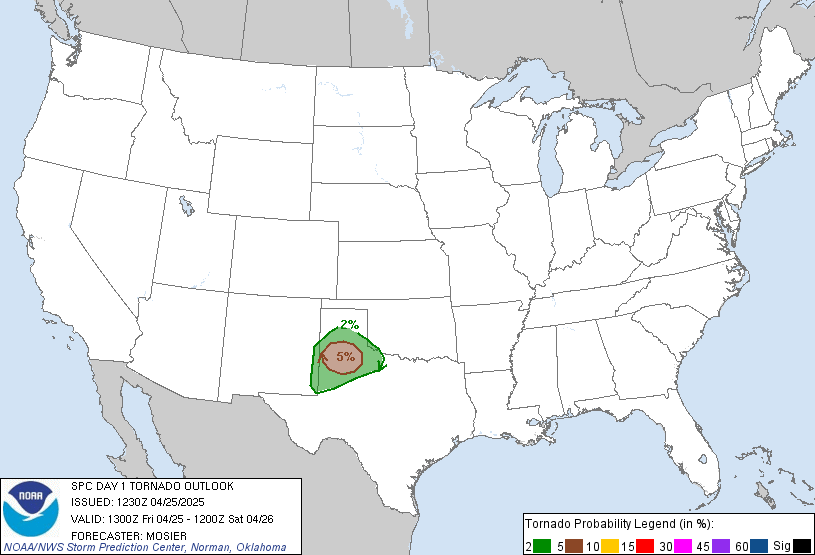
possibly funnels, or even a brief tornado, although this potential
currently seems low/uncertain.
..Guyer/Broyles.. 04/10/2026
Read more CHECK UPDATE ZOOM GRAPHIC
http://dlvr.it/TRyxxw