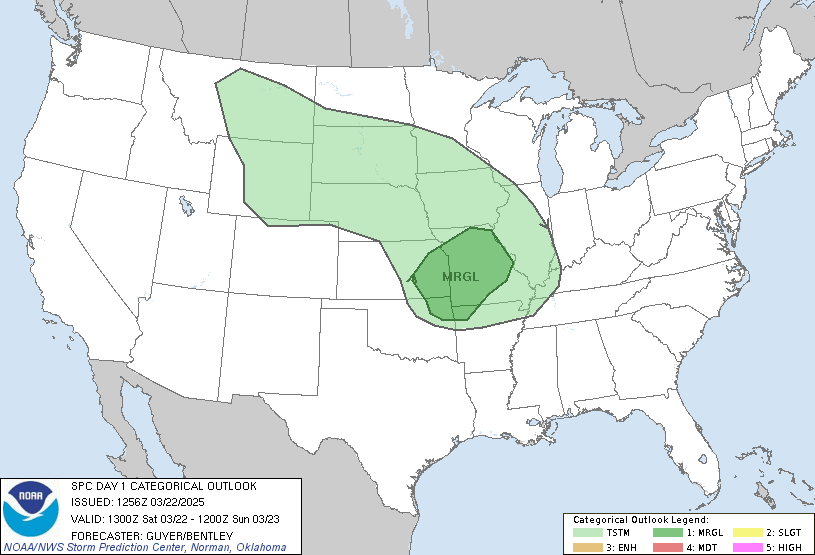
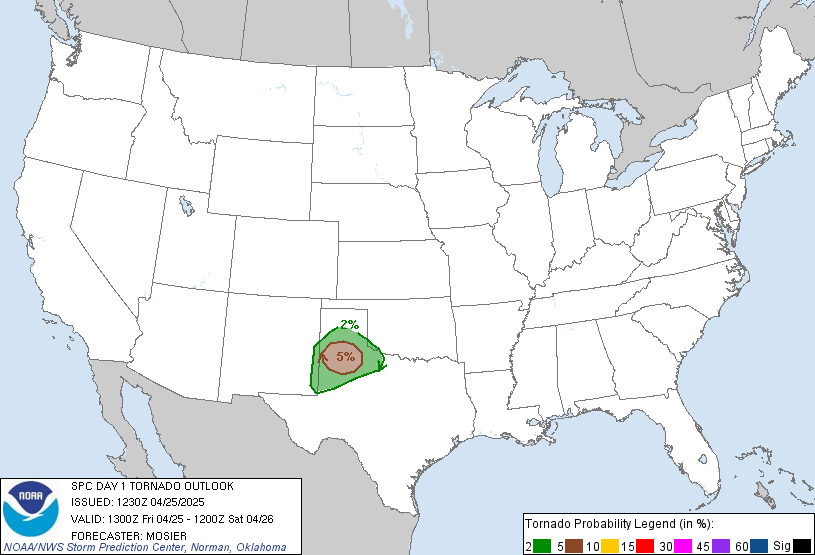
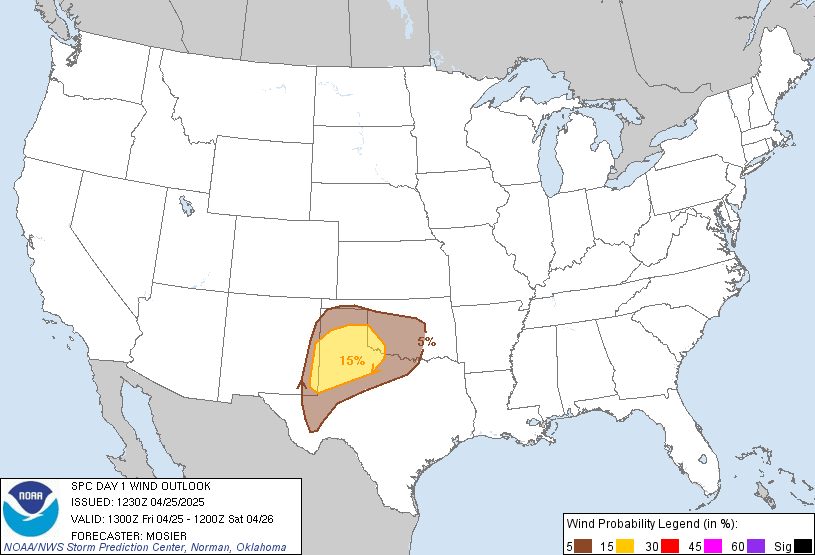
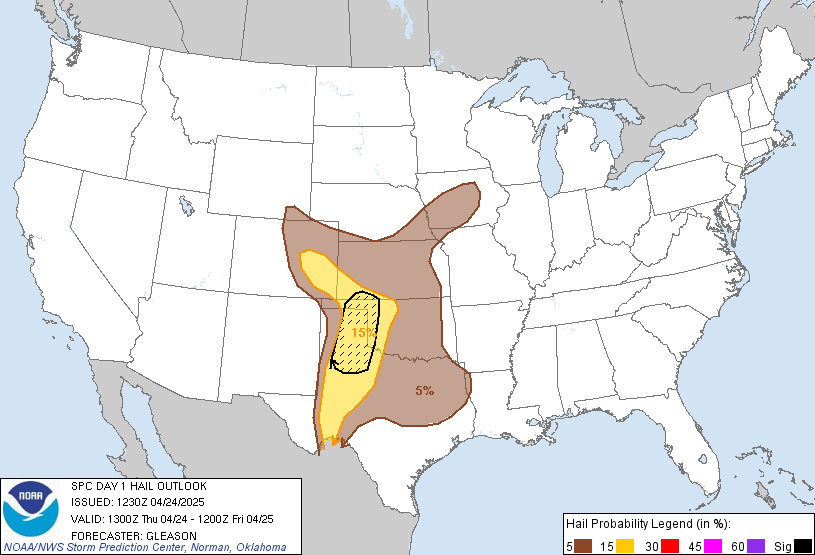
Day 1 Convective Outlook
NWS Storm Prediction Center Norman OK
0736 AM CDT Tue Mar 31 2026
Valid 311300Z - 011200Z
...THERE IS A SLIGHT RISK OF SEVERE THUNDERSTORMS FROM THE MID
MISSISSIPPI VALLEY ACROSS THE OHIO VALLEY AND SOUTHERN GREAT
LAKES...AND ACROSS WESTERN OKLAHOMA AND FAR NORTHWEST TEXAS...
...SUMMARY...
Scattered severe thunderstorms with damaging wind gusts and large
hail are expected today from the Mid Mississippi Valley across the
Ohio Valley and southern Great Lakes. Isolated severe storms capable
of large hail and damaging gusts are possible across western
Oklahoma and far northwest Texas as well.
...Synopsis...
Upper pattern is forecast to trend away from its previously more
zonal configuration towards more amplification today as the general
pattern begins to become more active. Several shortwave troughs are
expected across the CONUS today, combining with an expansive warm
sector to support an extensive stretch of strong to severe
thunderstorms from the southern High Plains into the Northeast.
Thunderstorms are also possible within the moist and confluent flow
from the Gulf Coast into the southern Appalachians and the
anonymously moist airmass across the Southwest. Additionally,
thunderstorms are possible during the second half of the period from
northern CA through the Great Basin as shortwave trough moves
quickly eastward across the region overnight.
...Mid/Upper MS Valley across the southern Great Lakes and OH Valley
into the Northeast...
Recent surface analysis places a low near the IA/WI border vicinity,
with perhaps another weak low farther southwest across southwest IA.
A warm front extends eastward from the IA/WI border surface low
across southern WI and southern Lower MI. Showers and thunderstorms
occurred overnight along and north of this boundary, with the
primary remnants currently over southwestern ON towards western NY.
Additional thunderstorm development is beginning to the northwest of
the IA/WI border surface low as well as farther south within the
warm sector across northern IL. This activity is likely supported by
a combination of persistent warm-air advection and ascent linked to
a subtle shortwave trough moving through IA. Most guidance suggests
this activity, particularly the IL cluster, increases in coverage
and intensity over the next several hours as it continues eastward
across Lower MI and eventually into western PA/western NY. Some
intensification of the convective remnants moving across southwest
ON is possible as well. Robust deep-layer westerly flow amid at
least modest buoyancy will support damaging gusts as the primary
severe risk with these clusters. There is also enough low-level
curvature to support a low-probability tornado risk, particularly
along the southwest flanks of the IL and ON clusters where a more
cell-in-line convective mode is possible. A line-embedded
circulation could also occur if these clusters can become more
organized.
How these clusters evolve, in particular the strength of any
outflow, will dictate the extent of airmass recovery in their wake.
This is particularly true across the OH Valley where much of the
guidance suggests another round of thunderstorms is possible along a
cold front forecast to move across the region this evening. Current
expectation is that the airmass will support strong to severe
thunderstorms, especially from central IN into central IL where the
influence of antecedent convection should be minimal. Steep lapse
rates and moderate shear will support a hail risk with the initially
more cellular development along the front. A trend towards a more
linear mode is anticipated thereafter, with undercutting by the cold
front likely as well.
Lastly, elevated thunderstorms are expected overnight from northern
MO into southern IA and central IL amid steep lapse rates and a
strengthening low-level jet. Marginally severe hail is possible with
this activity as well.
...Central/Southern Plains...
Recent surface analysis places a low over southwest KS, with a
dryline extending southwestward from this low through southeast NM
into Far West TX. This low is forecast to shift southeastward along
the leading edge of a cold front pushing southward into the TX
Panhandle and western OK, with its associated dryline gradually
shifting eastward. Increasing low-level moisture and strong heating
will help destabilize the airmass ahead of the front and surface
low. Low-level convergence along the front/dryline, and particularly
near the surface low, will support convective initiation. Vertical
shear will be sufficient for storm organization and a few supercells
are possible. Steep lapse rates and strong shear in the
cloud-bearing layer suggest large hail is possible early in the
convective cycle, while high LCLs suggest a trend toward strong
downbursts thereafter.
..Mosier/Bentley.. 03/31/2026
Read more CHECK UPDATE ZOOM GRAPHIC
http://dlvr.it/TRp4S9