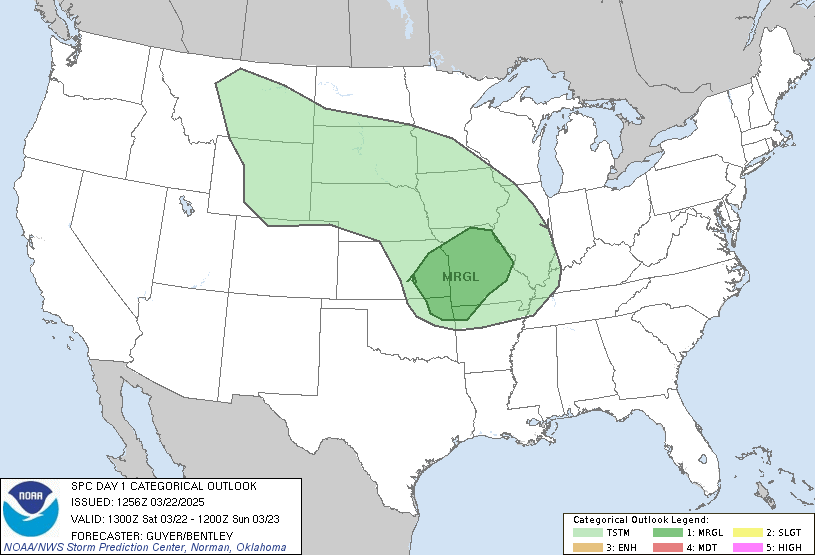
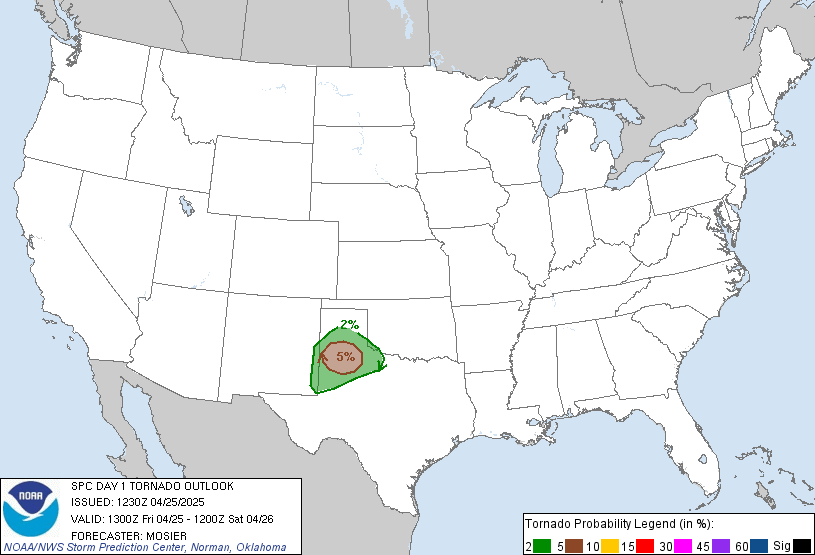
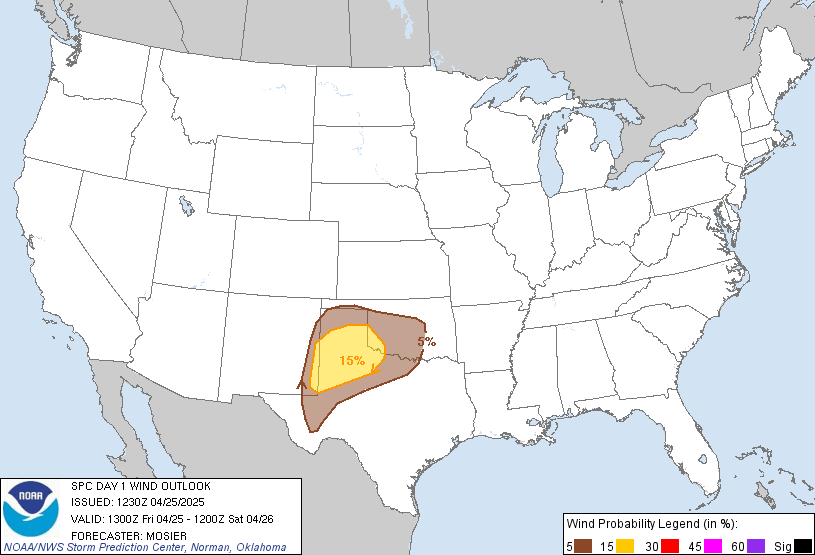
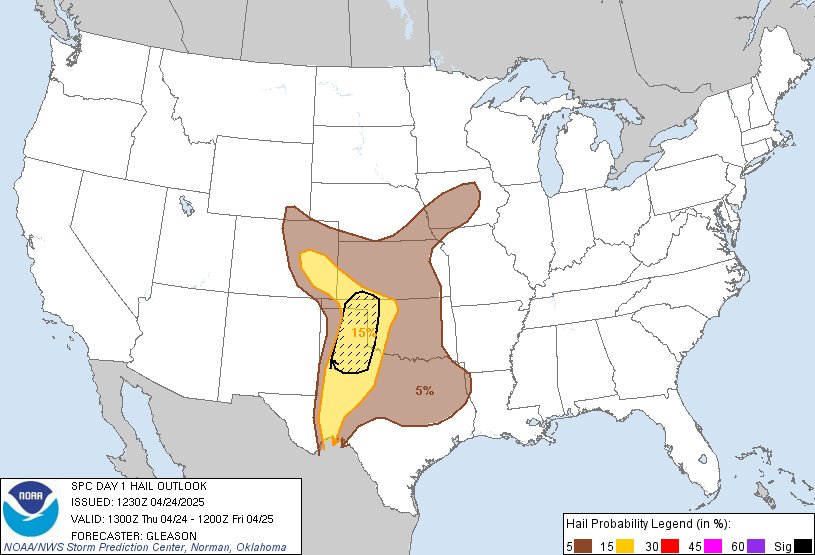
Day 1 Convective Outlook
NWS Storm Prediction Center Norman OK
0100 AM CDT Thu Jun 04 2026
Valid 041200Z - 051200Z
...THERE IS A SLIGHT RISK OF SEVERE THUNDERSTORMS ACROSS PORTIONS OF
THE NORTHERN PLAINS...
...SUMMARY...
Severe thunderstorms capable of large to very large hail and
damaging winds are possible today from parts of the northern High
Plains across northern Nebraska and much of South Dakota. More
isolated occurrences of large hail and damaging winds appear
possible farther south across portions of the central Plains.
...Synopsis...
Broadly zonal mid-level flow across the northern CONUS will persist
on Thursday, with a subtropical ridge located across the northern
Gulf. Additionally, a weak mid-level vorticity maximum/short-wave
trough across the southern/central Plains will continue to
weaken/open and begin merging into the main belt of westerlies
across the north-central US.
At the surface, a weak surface low will develop during the day
across the central High Plains. This low will move south and east
into north-central Kansas/south-central Nebraska overnight.
... Portions of the Northern Plains ...
Embedded within the broadly zonal flow are several subtle short-wave
troughs. One of these troughs will move from the northern Rockies
across the northern Plains. Ahead of this feature, moderate
instability will develop, with surface-based CAPE between 1500-2000
J/kg likely. As weak height falls overspread the region, a surface
low across eastern Wyoming will move south and east into northeast
Colorado and eventually into the central Plains. To the north of
this low, easterly/southeasterly upslope flow and increasing
large-scale ascent will combine for thunderstorms to develop during
the afternoon. Supercells will be possible as the southeasterly
surface winds and westerly mid-level flow results in 40-50 knots of
vertical shear. Steep mid-level lapse rates will support large to
very large hail and the potential for damaging thunderstorm winds. A
tornado or two will be possible with any storm that can interact
with the synoptic front.
Another area for storms will likely occur farther east, across
eastern South Dakota along a residual/slow-moving cold front.
Moderate instability and weak-to-moderate shear will support some
thunderstorm organization. Large hail will be possible with initial
development, with a tendency for storms to grow upscale and
transition to a damaging wind threat.
... Central Kansas northeast into Central Iowa...
A remnant MCV/sub-synoptic low/mid-level trough located across the
Southern Plains this morning will slowly lift north/northeast across
the Central Plains during the day. Ahead of this feature, surface
dewpoints will rise into the upper-60Fs to low-70Fs, resulting.
Diurnal heating should result in increasing instability during the
day, as suggested by the HREF mean surface-based CAPE reaching
between 1000-1500 J/kg and localized areas approaching 2000-2500
J/kg.
With several days of convection upstream of northeast Kansas into
southwest Iowa in the elevated mixed layer source region, forecast
soundings across the region reflect a largely uncapped environment
during the afternoon. The result should be multiple areas/rounds of
convective development during the afternoon and evening hours. The
moist environment and potential for moderate instability will result
in a potential for strong thunderstorm winds and marginally severe
hail. Additionally, forecast guidance shows an increasing low-level
mass field response during the evening hours, resulting in
increasing low-level curvature/shear. Thus, a tornado threat may
materialize during the late afternoon/evening hours, especially with
any thunderstorms that can remain discrete.
..Marsh/Moore.. 06/04/2026
Read more CHECK UPDATE ZOOM GRAPHIC
http://dlvr.it/TSsjdt