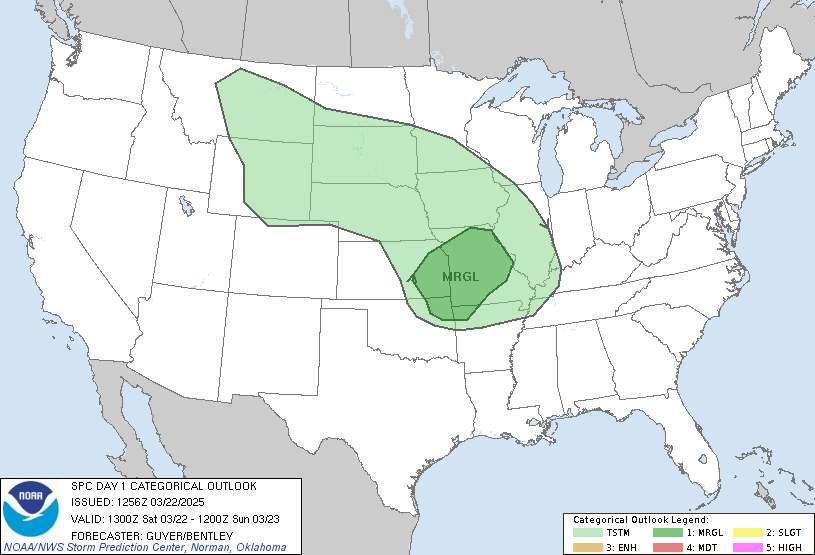
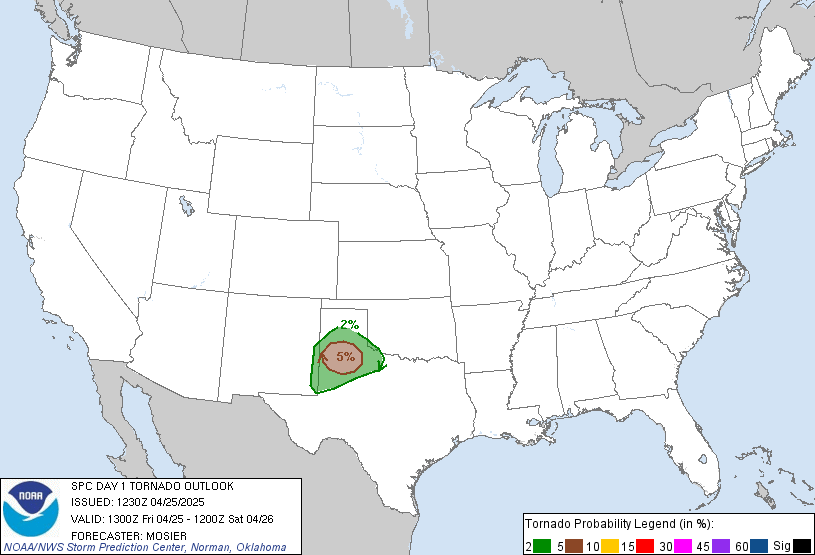
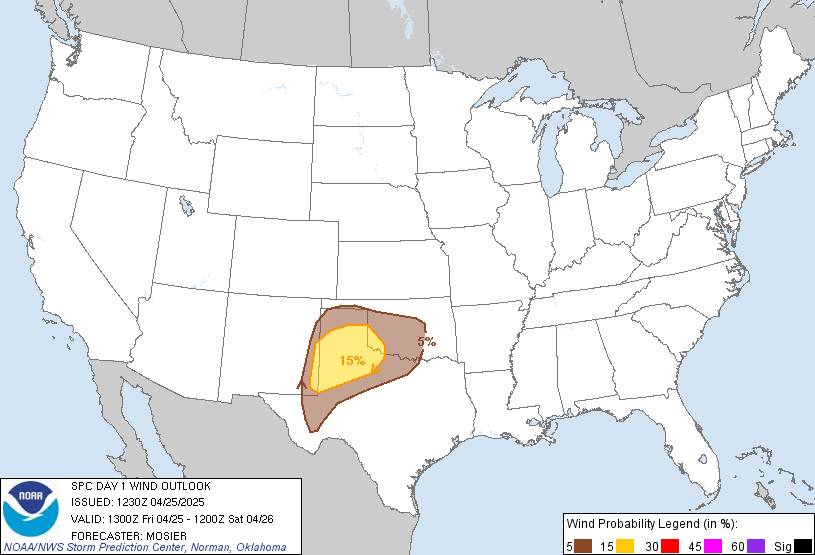
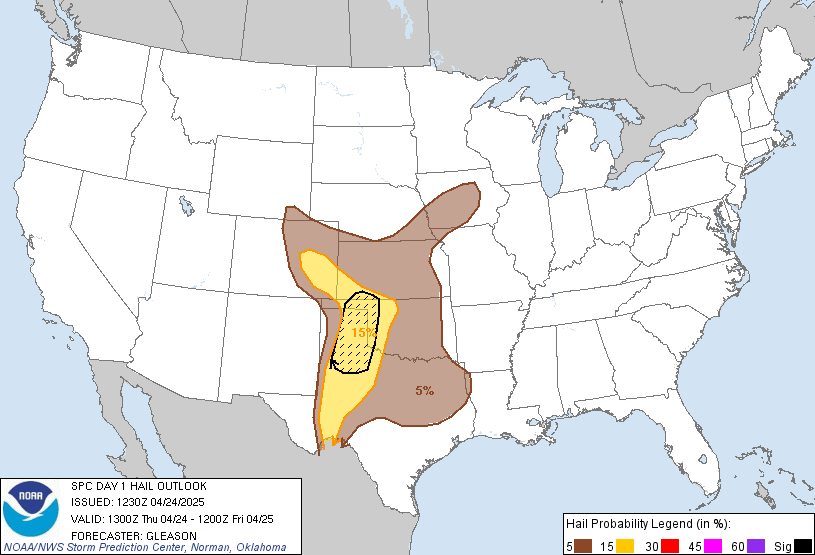
Day 1 Convective Outlook
NWS Storm Prediction Center Norman OK
0300 PM CDT Fri Jun 26 2026
Valid 262000Z - 271200Z
...THERE IS A SLIGHT RISK OF SEVERE THUNDERSTORMS ACROSS THE
NORTHERN/CENTRAL HIGH PLAINS...SOUTHERN PLAINS TO THE LOWER OHIO
VALLEY...AND PARTS OF NEW ENGLAND...
...SUMMARY...
Scattered severe thunderstorm development is expected today,
particularly this afternoon into tonight across parts of the
southern Plains to Lower Ohio Valley and across parts of the
northern and central High Plains to the Black Hills vicinity. Other
severe storms are expected across portions of New England.
...20Z Update...
The forecast remains on track, and only minor changes were made with
this update.
The SLGT risk in the central High Plains was expanded southeastward
from southeast CO into southwest KS and parts of the OK/TX
Panhandles. Guidance is in relatively good agreement, depicting
thunderstorms evolving off the Raton Mesa and tracking
east-southeastward along a gradient of rich boundary-layer
moisture/moderate surface-based buoyancy this evening/tonight. Aided
by 40 kt of effective shear and increasing low-level hodograph
curvature amid a strengthening nocturnal LLJ, supercell clusters
will pose a risk for severe gusts, large hail, and possibly a
tornado.
Farther east, a minor westward expansion of the SLGT risk was made
into north-central OK. Ample diurnal heating/destabilization of a
very moist air mas (middle/upper 70s dewpoints) is yielding strong
surface-based buoyancy along an east/west-oriented surface boundary.
Current thinking is that a few organized clusters/supercells
developing along the boundary will be capable of producing severe
wind gusts and large hail later this afternoon/evening.
..Weinman.. 06/26/2026
.PREV DISCUSSION... /ISSUED 1147 AM CDT Fri Jun 26 2026/
...Ozarks and Lower Ohio Valley...
Multiple eastward-moving MCVs remain evident regionally in
observational data at midday, probably strongest across southeast
Missouri, but also the Oklahoma/Arkansas border vicinity and
northern Kentucky. A related observed enhancement to the
low/mid-level flow will persists from the Ozarks/Bootheel
east-northeastward parallel to the Ohio River, but cloud
cover/scattered precipitation remains fairly prevalent regionally as
well. Peripheral cloud breaks and insolation should allow for
gradual destabilization, particularly on the south/southwest fringes
of this early day activity. This should lead to severe storm
development into mid/late afternoon through the evening, potentially
including supercells given the flow enhancement. A couple of
tornadoes could occur aside from wind damage.
...High Plains...
A seasonably anomalous upper trough will continue to amplify and
spread eastward over the Pacific Northwest toward the Great Basin
and Intermountain West, with a lead disturbance ejecting
northeastward toward the northern High Plains. Pronounced lee
troughing is forecast with a surface low expected to evolve over
central and southeast Montana through tonight. A corridor of at
least weak to moderate boundary-layer destabilization is expected
across the High Plains. Strengthening large-scale ascent and ample
vertical shear downstream of the digging large-scale troughing will
favor organized severe thunderstorm development late this afternoon
through evening. Supercells and evolving organized clusters will
pose a risk for large hail and severe gusts, and perhaps a tornado.
Across the central into southern High Plains, isolated to widely
scattered storms will likely develop/mature and propagate east
during the evening. Hail and wind are the primary hazards with this
activity and this severe risk will probably linger into the late
evening.
...New England...
Have introduced a Slight Risk for portions of the region, primarily
focused near the advancing surface low/warm front. A shortwave
trough over Ontario/Lower Great Lakes will move east across New
England by this evening. Cloud cover, albeit abating this afternoon,
will limit the overall magnitude of destabilization, but upwards of
1000-1500 J/kg SBCAPE are forecast to develop along/south of a warm
front. Elongated hodographs beneath a 100+ kt 250-mb speed max will
aid in storm organization in the form of possibly a couple of
supercells and organized multicells. Isolated coverage of large hail
and damaging gusts are the primary risks with the stronger
thunderstorms, but the moist environment and low-level shear/SRH
could yield a tornado threat.
...Mid-Atlantic States to Carolinas...
The southern periphery of stronger mid to high-level westerly flow
is forecast across the region, atop northward-shifting low-level
moisture that is richest across the Carolinas into southern
Virginia, where near/above 70 F surface dewpoints are prevalent. The
overlap of moderate westerly flow and weak destabilization is
expected to support scattered thunderstorms capable of strong to
locally severe/damaging gusts (50-60 mph). Additional sea-breeze
influenced locally severe storms may occur across the coastal plain
of the Carolinas.
Read more CHECK UPDATE ZOOM GRAPHIC
http://dlvr.it/TTDq8x