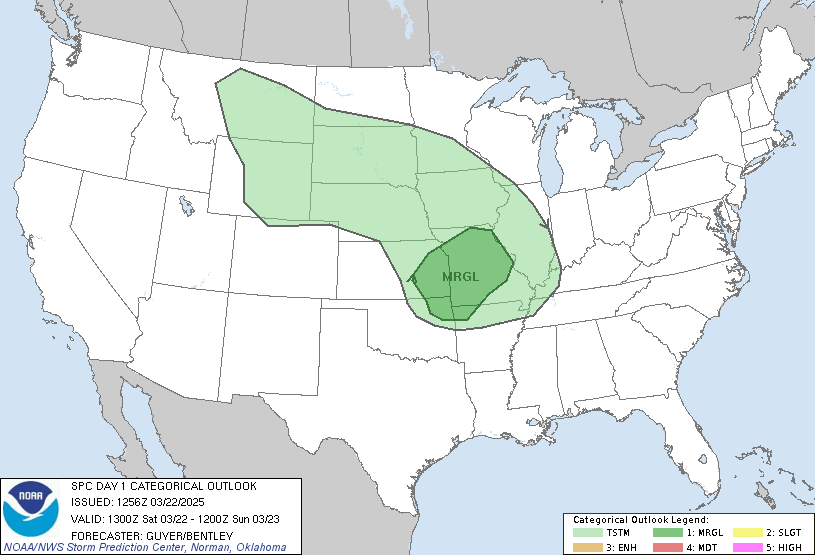
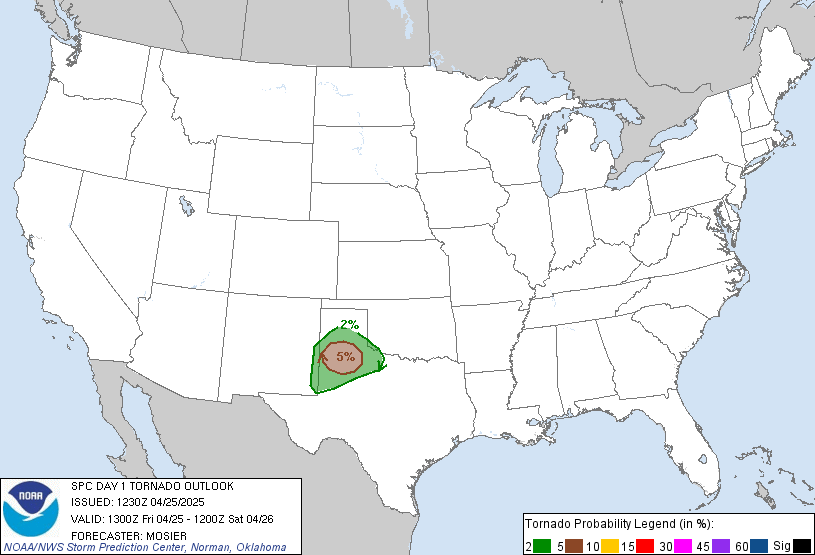
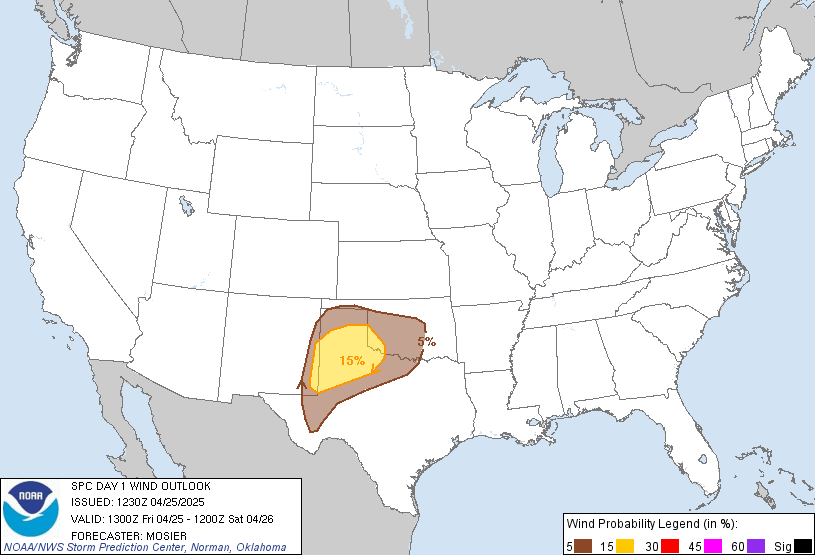
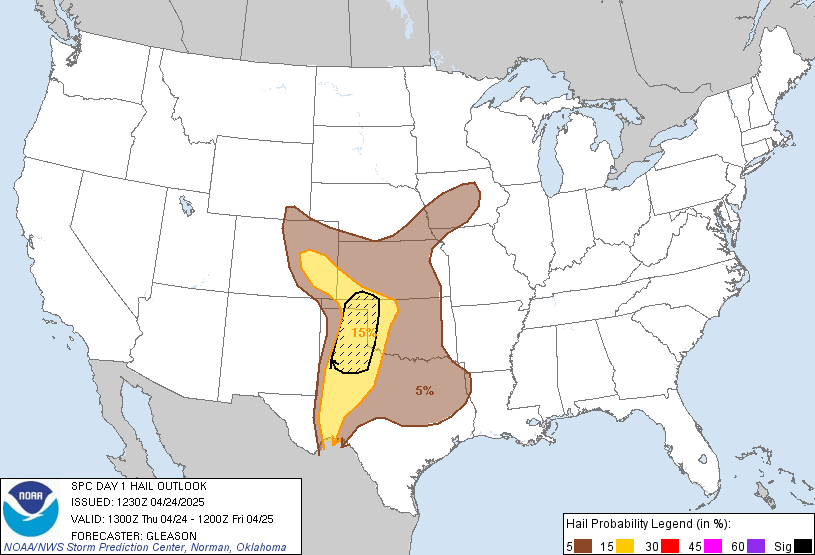
Day 1 Convective Outlook
NWS Storm Prediction Center Norman OK
0304 PM CDT Wed Jun 17 2026
Valid 172000Z - 181200Z
...THERE IS A MODERATE RISK OF SEVERE THUNDERSTORMS ACROSS PARTS OF
ILLINOIS AND INDIANA...
...THERE IS A SLIGHT RISK OF SEVERE THUNDERSTORMS ACROSS PARTS OF
SOUTHEASTERN LOUISIANA AND SOUTHERN MISSISSIPPI...
...SUMMARY...
Numerous severe thunderstorms remain likely this afternoon into
tonight, with the peak threat centered over Illinois and Indiana.
Intense tornadoes, swaths of damaging gusts over 75 mph and damaging
wind-driven large hail will all be possible.
...20z Update...
An extremely complicated forecast scenario will continue this
afternoon in the wake of a persistent morning convective cluster. An
anomalously strong upper trough and jet are still forecast to move
over parts of the Midwest and Great Lakes this afternoon and
evening. This will support renewed convective development near the
trailing outflow from the morning cluster over the Midwest and along
the synoptic cold front from northeast MO into parts of KS and far
northern OK.
Rapid modification of the air mass along and north of the trailing
outflow boundary/effective warm front still appears plausible given
1-2 mb/hr pressure falls, ongoing low-level moisture advection and
strong heating ahead of the deepening surface cyclone. A focused
mesoscale corridor of strong to intense tornado potential remains
evident from east of St Louis, MO, across south-central IL and into
west-central IN, where RAP soundings show 1000-2000 J/kg of MLCAPE
and exceptionally strong low and mid-level shear with ESRH upwards
of 400-600 m2/s2. The primary uncertainty remains the development
and maintenance of supercells in the wake of the MCS. CAM guidance
remains insistent on a few intense supercells organizing in this
corridor from late afternoon into the evening with a risk for strong
tornadoes, large hail and damaging winds. The threat may persist
into portions of eastern IN, KY and western OH tonight.
Across central MO into KS and OK, a very unstable and moderately
sheared air mass (18z TOP/SGF RAOBS) will promote rapid supercell
development in the next couple of hours along and ahead of the
sagging cold front. Large to very large hail, damaging winds and
tornadoes are possible. As large-scale forcing for ascent moves away
this evening, storm coverage should slowly diminish, though the more
intense supercells may linger well into the evening with an all
hazards risk.
Primary changes to the outlook were to remove northern portions of
the ENH and MDT risk areas where substantial air mass recovery is
unlikely. Wind probabilities were increased on the southern end near
the OH River to account for clustering of expected upstream
development.
Elsewhere, minor changes were made to trim probabilities behind the
cold front. See the previous discussion for additional information.
..Lyons.. 06/17/2026
.PREV DISCUSSION... /ISSUED 1128 AM CDT Wed Jun 17 2026/
...MO/IL/IN...
An intense and fast-moving shortwave trough continues to approach
the Midwest today, with an associated 90+ knot mid level jet
streaking across the region. A very strong southerly low-level jet
precedes this trough, and has resulted in widespread thunderstorms
over central IL. The effects of this early convection will be
important to the mesoscale details of where the main risk of severe
storms will develop later today.
The primary outflow boundary from ongoing storms currently extends
from extreme northeast MO into south-central IL, and continues to
sag southward. Strong heating is occurring to the south of the
boundary, and given the intense low-level flow, some northward
return is expected. However, it appears unlikely to substantially
destabilize as far north as earlier forecasts. The zone in vicinity
of the boundary will become very unstable by mid-late afternoon,
with forecast soundings continuing to show impressive shear values
and hodograph structures suggestive of tornadic supercell potential.
Very large hail and damaging winds will also be possible with this
activity as it tracks quickly eastward into central IN. Strong
tornadoes are possible.
By mid-evening, a line of severe storms will likely extend from
central MO into southern IN, with damaging winds becoming the
primary threat.
...Southeast MN...
A small area of heating/destabilization has developed near the
surface low over southern MN. Cold temperatures aloft and strong
deep-layer shear suggests a threat of a few severe storms capable of
hail and gusty/damaging winds this afternoon.
...LA/MS...
Tropical Storm Arthur will track northward and affect LA and
southern MS tonight. A zone of strong southerly low-level winds to
the east of the circulation will result in some concern for
overnight and pre-dawn tornadoes across southeast LA into far
southern MS.
...Southern AZ/NM...
Scattered afternoon and evening thunderstorms are expected across
southeast AZ and southwest NM. Strong heating and ample instability
will pose a risk of damaging wind gusts in the strongest cells.
Read more CHECK UPDATE ZOOM GRAPHIC
http://dlvr.it/TT5Pwc