Day 1 Convective Outlook
NWS Storm Prediction Center Norman OK
0742 AM CDT Wed May 06 2026
Valid 061300Z - 071200Z
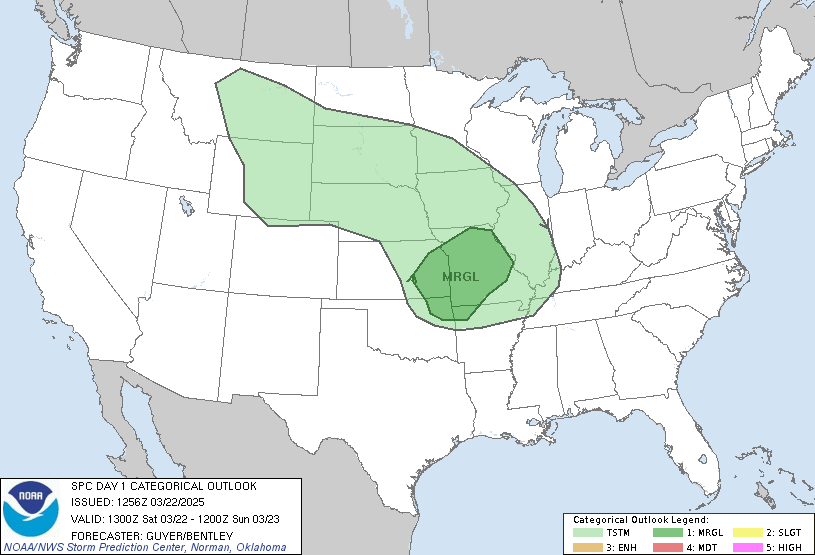
...THERE IS AN ENHANCED RISK OF SEVERE THUNDERSTORMS ACROSS PORTIONS
OF NORTHERN LOUISIANA...CENTRAL MISSISSIPPI...AND CENTRAL ALABAMA...
...THERE IS A SLIGHT RISK OF SEVERE THUNDERSTORMS ACROSS THE WESTERN
TEXAS HILL COUNTRY...
...SUMMARY...
Scattered severe thunderstorms are expected this afternoon and
evening from eastern Texas into the lower Mississippi and Tennessee
Valleys/southern Appalachians. Supercells capable of all hazards
will be possible across portions of central Mississippi and Alabama
before a shift to a more of a damaging wind risk into the late
evening/overnight.
...Synopsis...
Early-morning satellite imagery shows a pair of phased shortwave
troughs, one in the northern stream moving southward into UT/CO and
the other in southern stream off the southern CA/northern Baja
coast. Strong, confluent flow aloft exists downstream of these
shortwaves, with an extensive fetch of moderate to strong
southwesterly flow extending from northern Mexico into the
Northeast. A general deepening of the upper troughing is anticipated
throughout the day as the northern-stream shortwave continues
southeastward while the southern-stream shortwave moves gradually
eastward. This evolution will result in strengthening mid to upper
level flow from the southern Plain into New England, particularly
from the Lower MO Valley through the OH Valley where 500 mb flow
could exceed 100 kt. This evolution will also push a cold front,
which currently extends from the TX Hill Country into western PA,
farther south.
There will be some displacement between the strongest flow aloft and
the more warm and moist conditions south of the front. However,
even with this displacement, moderate to strong upper/mid flow is
still expected across much of the southern Plains and Southeast.
Strong to severe thunderstorms are still expected along and ahead of
this cold front from the TX Hill Country through the Southeast and
into the Carolinas. Highest coverage of severe thunderstorms will be
from central MS into central AL, where supercells capable of all
hazards will be possible.
...East TX/Lower MS Valley into the Southeast...
Recent surface analysis placed the cold front from near JCT in the
TX Hill Country northeastward through the Arklatex, northern MS, and
western TN. A weak low exists along this boundary over the western
AR/LA vicinity. 70s dewpoints extend from south TX across LA into
far western MS and southern AR, with upper 60s dewpoints through
much of MS. Low-level moisture advection is expected to continue
throughout the day, with mid 70s dewpoints possible from central LA
into central MS by the afternoon. This increasing moisture amid
filtered daytime heating will result in strong buoyancy ahead of the
front (i.e. 2500 J/kg of MLCAPE), despite poor mid-level lapse
rates. Also, as mentioned in the synopsis, strong deep-layer shear
will be in place, resulting in an overall airmass that supports
supercells.
However, whether discrete supercells can develop and mature remains
uncertain. A combination of neutral height tendencies, widespread
cloud cover, and warm-air advection initiated storms will likely
lead to complex convective evolution and related storm interactions.
Majority of the convection-allowing guidance develops
thunderstorms within the warm sector from northern LA into central
MS by 18Z. Thunderstorm development is possible along the front from
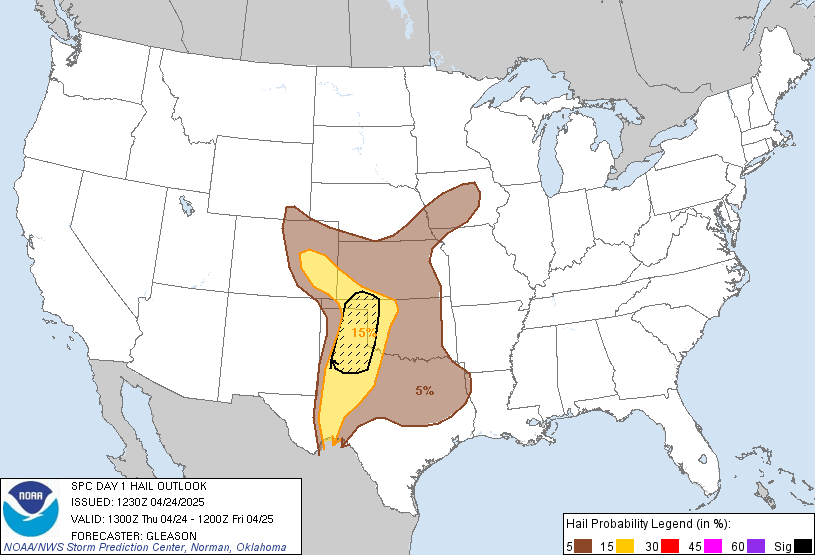
northern AL into northern LA around this time as well. Large to very
large hail will be the primary risk with these storms, although
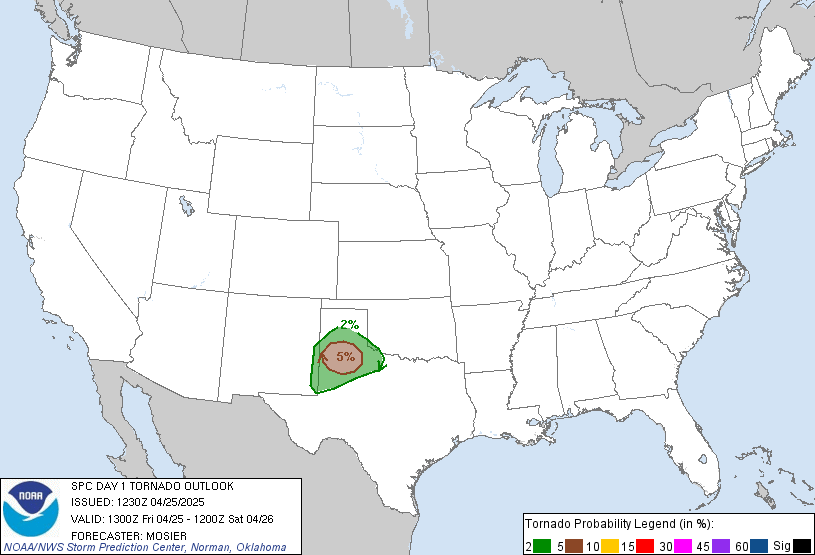
there is also a risk for tornadoes if a storm can remain discrete.
The tornado risk is expected to increase from the late afternoon
through the evening from central MS into central AL as low-level
hodographs lengthen in response to strengthening low-level flow.
Environmental conditions support the potential for a strong tornado
during this timeframe. Whether or not storms can realize this
increasing low-level shear will largely be a function of storm mode.
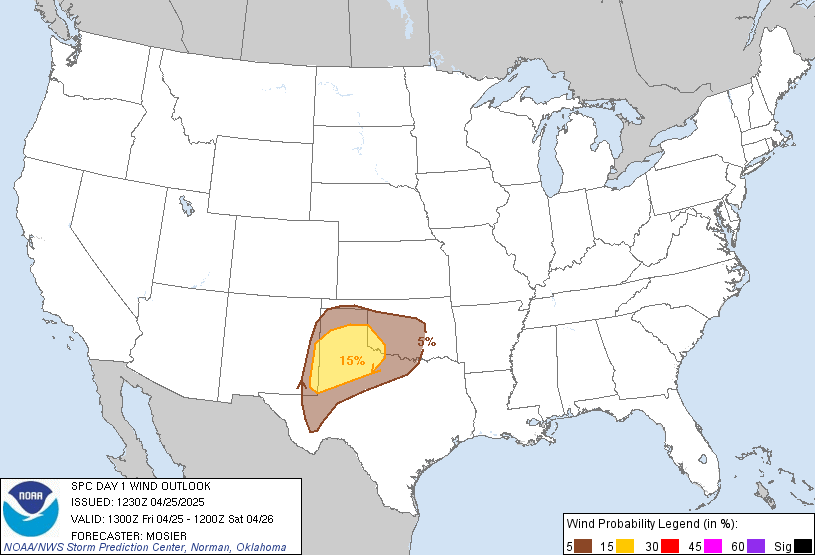
Storms should eventually begin to cluster and to grow upscale, with
an increasing damaging wind threat continuing downstream into
portions of southern Alabama and central/southern Georgia.
The front will continue slowly southward, and the very moist
environment could support additional warm sector storms throughout
much of the evening and overnight, supporting a continued risk for
all severe hazards. Several rounds of elevated storms are possible
as well, with hail as the primary risk with these storms.
...TX Hill Country into southeast TX...
A pair of supercells capable of large hail are currently ongoing
across southwest TX (Crockett and Sutton Counties). Environmental
conditions are favorable for storm maintenance for at least an hour
or two before northward displacement from the better buoyancy leads
to weakening. Additional isolated development is possible farther
east into central and southeast TX during the afternoon and evening.
Any storms that mature would likely be supercellular and capable of
producing severe hail and damaging wind gusts.
..Mosier/Dean.. 05/06/2026
Read more CHECK UPDATE ZOOM GRAPHIC
http://dlvr.it/TSPVKK