Day 1 Convective Outlook
NWS Storm Prediction Center Norman OK
1258 AM CDT Mon May 04 2026
Valid 041200Z - 051200Z
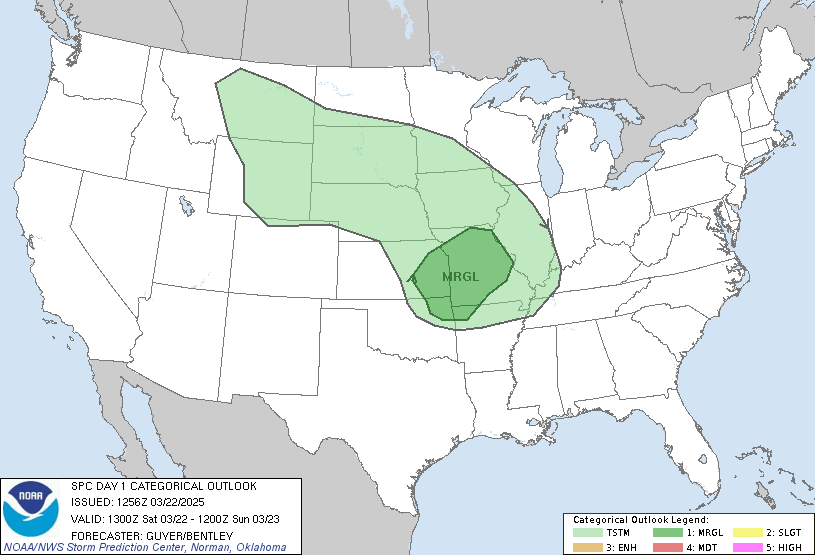
...THERE IS A MARGINAL RISK OF SEVERE THUNDERSTORMS ACROSS PORTIONS
OF THE MIDWEST INTO THE CENTRAL/SOUTHERN PLAINS...
...SUMMARY...
Strong to severe thunderstorms capable of large hail and damaging
wind are possible across portions of the Midwest late Monday
afternoon into Monday night. A conditional threat for severe storms
with large to very large hail extends into portions of the
central/southern Plains.
...Synopsis...
Strengthening mid-level flow will move out of Canada today,
deepening the Eastern US trough, with a surface low developing
across Ontario and a cold front shifting south across the northern
Plains into the central Plains and Midwest. Across the west, flow
will strengthen in within a cutoff low just off the shore of
California before overspreading portions of the Southwest into the
Southern Plains. A surface low is expected to develop across Kansas,
with a dryline extending south into Oklahoma/north Texas. Areas of
strong to severe storms will be possible from the Midwest into
portions of eastern Kansas and south into Oklahoma/northern Texas.
...Eastern Kansas into Mid-Mississippi Valley...
Thunderstorm development will likely be delayed until the late
afternoon/evening across eastern Kansas into Missouri owing to
strong MLCIN and generally weak forcing. Daytime heating and dew
points in the mid 50s to 60s should yield moderate MLCAPE across a
region from eastern Kansas northward into Missouri and western
Illinois. As the low-level jet increases into the evening with the
cold front shifting south, scattered thunderstorm development is
expected. Initially, strongly sheared profiles and steep lapse rates
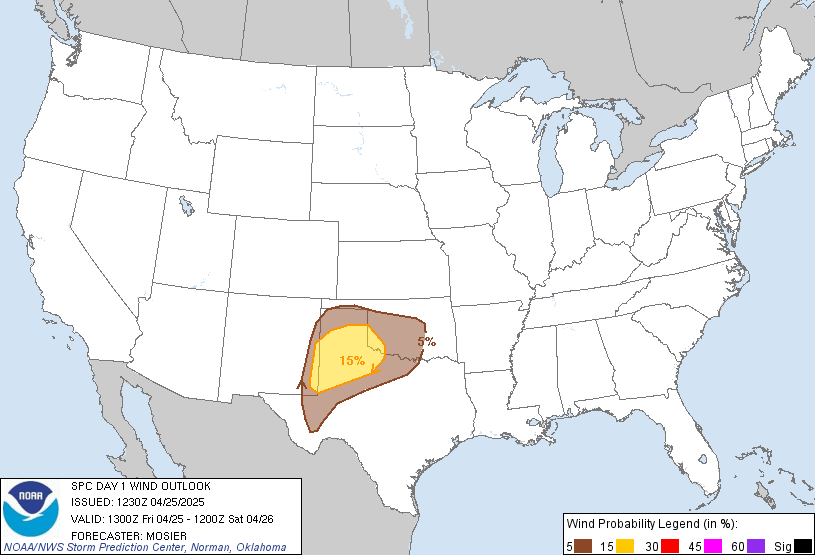
will support supercells capable of large hail and damaging wind,
primarily across eastern Kansas. Through time as additional storms
develop and cluster along the front, the risk for damaging wind may
increase. A few CAM members suggest a few clusters/bowing segments
may move across northern Missouri and west-central Illinois, though
there is disagreement in location/timing. A corridor of higher wind
probabilities and upgrade to Slight may be warranted as details
become clearer.
...Lower Great Lakes Vicinity...
Scattered thunderstorm development will continue further north into
the Great Lakes region along the cold front. Moisture becomes more
limited with northern extent which may limit the severe threat.
However, strong flow aloft and steep lapse rates may still support
downward mixing and swaths of strong to severe wind.
...South-central Kansas into Oklahoma and northern Texas...
A more conditional threat for storms will exist along the dryline
across southern Kansas into central Oklahoma and northern Texas.
Strong daytime heating is expected across this region along and
behind the dryline. Forecast sounding comparison indicates the
dryline circulation will be strong and deep through the afternoon.
Mid-level capping will likely inhibit convection until stronger flow
aloft overspreads the region by the late afternoon/evening. The
low-level jet will also strengthen at this time, with MLCIN eroding.
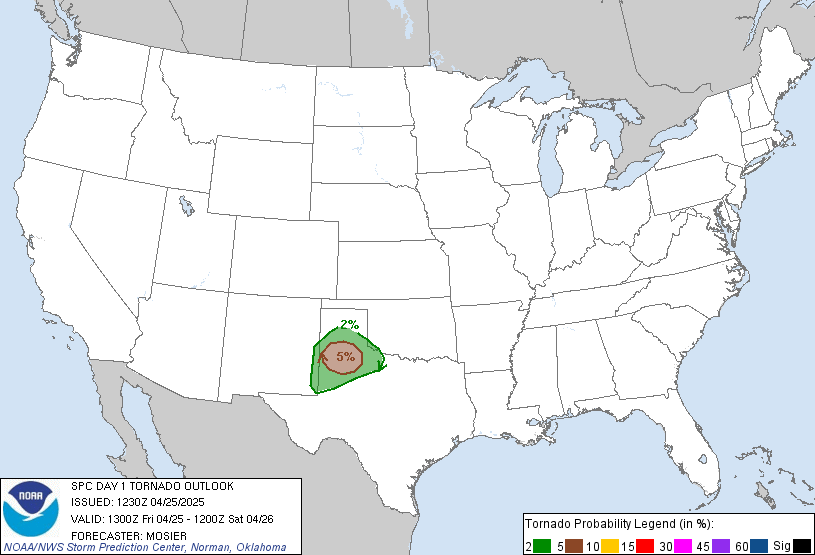
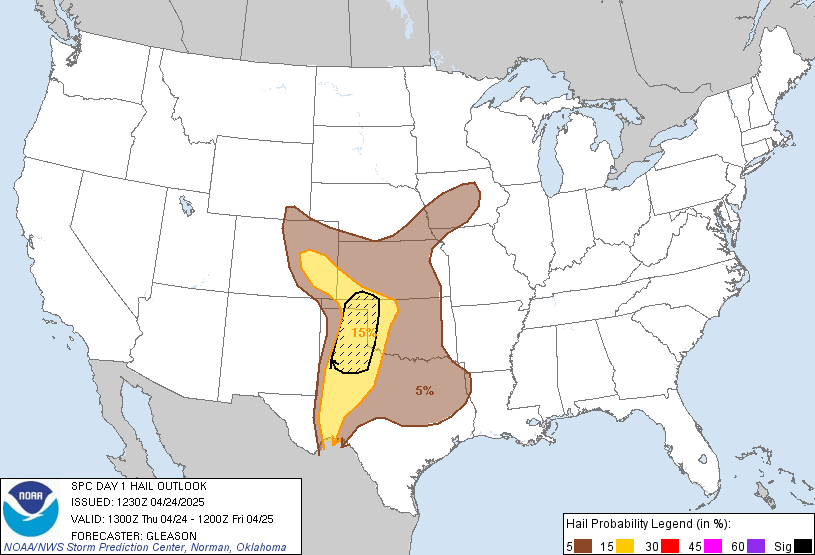
It is possible that an isolated supercell or two could develop and
produce large to very large hail (some 2+ inches). The best signal
for this is near the Red River in southern Oklahoma/northern Texas.
However, a few members do have development further north across
northern Oklahoma and into southeastern Kansas.
..Thornton/Lyons.. 05/04/2026
Read more CHECK UPDATE ZOOM GRAPHIC
http://dlvr.it/TSMC6m