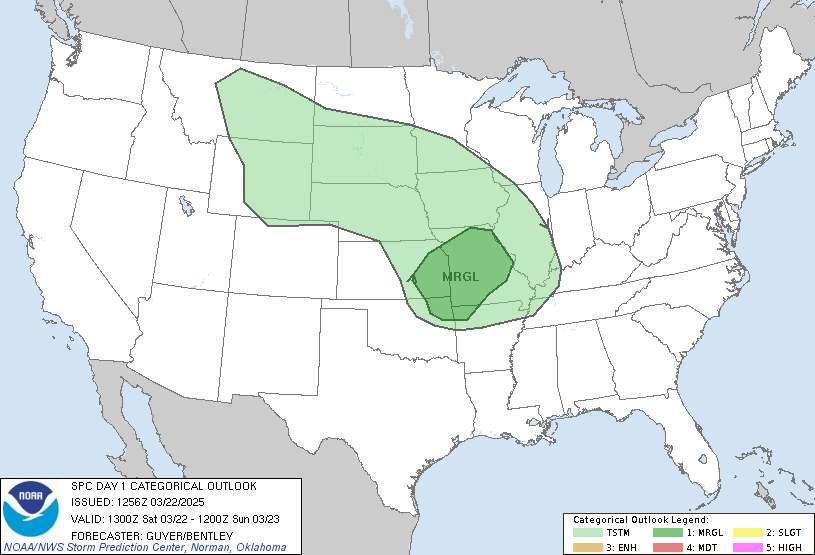
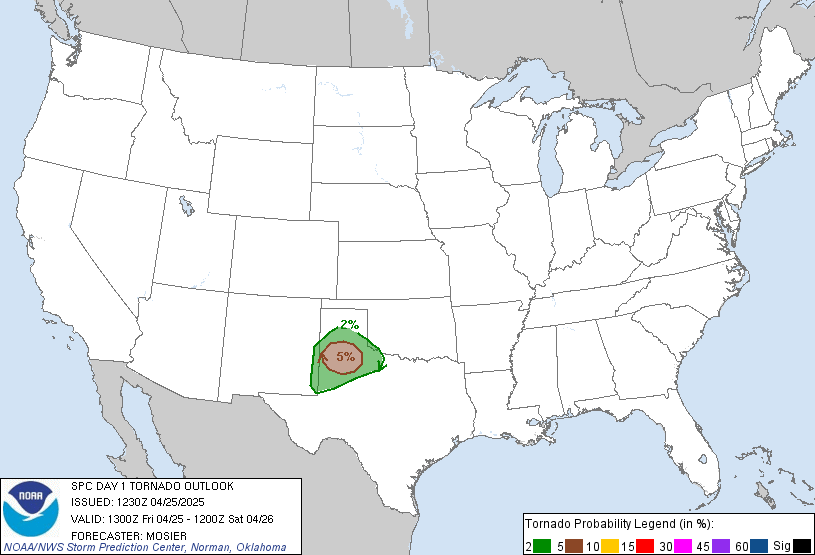
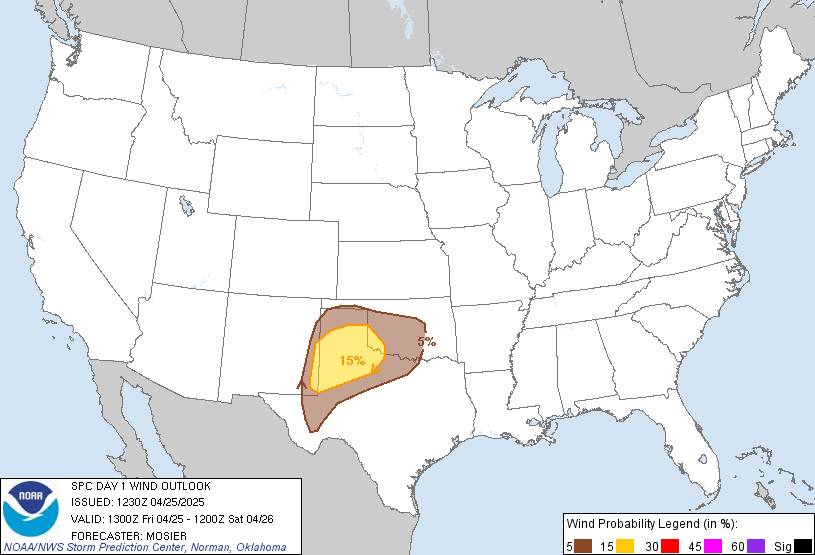
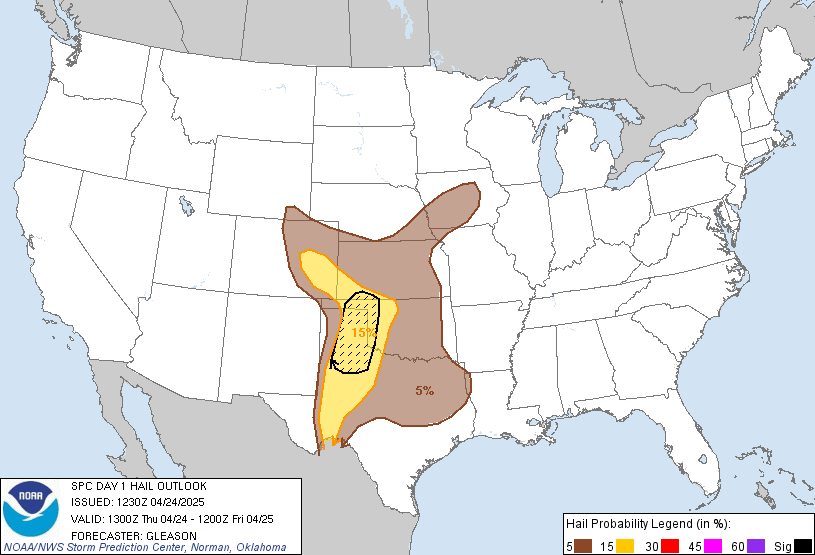
Day 1 Convective Outlook
NWS Storm Prediction Center Norman OK
0805 PM CDT Mon May 18 2026
Valid 190100Z - 191200Z
...THERE IS AN ENHANCED RISK OF SEVERE THUNDERSTORMS ACROSS PARTS OF
FAR NORTHERN OKLAHOMA...SOUTHERN AND EASTERN KANSAS INTO NORTHWEST
MISSOURI...FAR SOUTHEAST NEBRASKA AND SOUTH-CENTRAL IOWA...
...SUMMARY...
Numerous severe thunderstorms are expected this evening from the
southern and central Plains into the mid Missouri Valley. Supercells
and bowing line segments capable of producing severe wind gusts,
tornadoes and large hail remain likely from eastern and southern
Kansas into far southeast Nebraska, Iowa and northwest Missouri.
...Southern and Central Plains/Mid Missouri Valley...
At the synoptic level, multiple shortwave troughs are ejecting
northeastward across the central U.S. early this evening. A 50 to 70
knot mid-level jet is translating northeastward across the central
Plains, with a 40 to 50 knot low-level jet in place from northern
Oklahoma into eastern Kansas and western Missouri. A squall-line is
ongoing along the western edge of the low-level jet, and this line
will move east-southeastward across the remainder of eastern Kansas
into western Missouri this evening into tonight. Ahead of the line,
strong instability is analyzed by the RAP with MLCAPE in the 3000 to
4000 J/kg range. This, combined with strong large-scale ascent to
the southeast of the mid-level jet, and moderate deep-layer shear
evident on regional WSR-88D VWPs, will continue to support a severe
threat with this line for the remainder of the evening. Severe wind
gusts with be likely along the leading edge of the line. Large hail
and tornadoes will also be possible with rotating elements embedded
in the line.
Further north-northeast into northeast Kansas, northwest Missouri
and south-central Iowa, several semi-discrete supercells are
ongoing. The Kansas City WSR-88D has 0-3 km storm-relative helicity
near 475 ms/s2, which appears representative of the environment
ahead of these storms. For this reason, a potential will continue
for strong tornadoes over the next few hours. These supercells will
also be capable of producing large hail and severe wind gusts.
The squall-line will gradually move east-southeastward into the
lower Missouri Valley and Ozarks from late this evening into the
overnight period. The severe threat will become less widespread as
relatively weaker instability is encountered later tonight.
...Southern Plains...
At the surface, a 997 mb low is located over far northwestern
Oklahoma, with a dryline extending southward across far western
Oklahoma into west Texas. To the east of the dryline, the RAP has
MLCAPE in the 3000 to 4000 J/kg range. Near the axis of the
strongest instability, a few storms are ongoing across southwest
Oklahoma, but weakening has recently occurred. Redevelopment will be
possible later this evening. The strong instability combined with
moderate deep-layer shear and steep low to mid-level lapse rates
would support a threat for large hail and severe wind gusts, if
cells can re-intensify. An isolated tornado threat will also be
possible if a supercell could develop. Thunderstorms are expected to
increase in coverage over much of Oklahoma during the overnight
period, as a cold front moves southward. However, the severe threat
should become more isolated tonight as instability gradually
decreases across the region.
..Broyles.. 05/19/2026
Read more CHECK UPDATE ZOOM GRAPHIC
http://dlvr.it/TScBBY