Day 1 Convective Outlook
NWS Storm Prediction Center Norman OK
1130 AM CDT Sat May 16 2026
Valid 161630Z - 171200Z
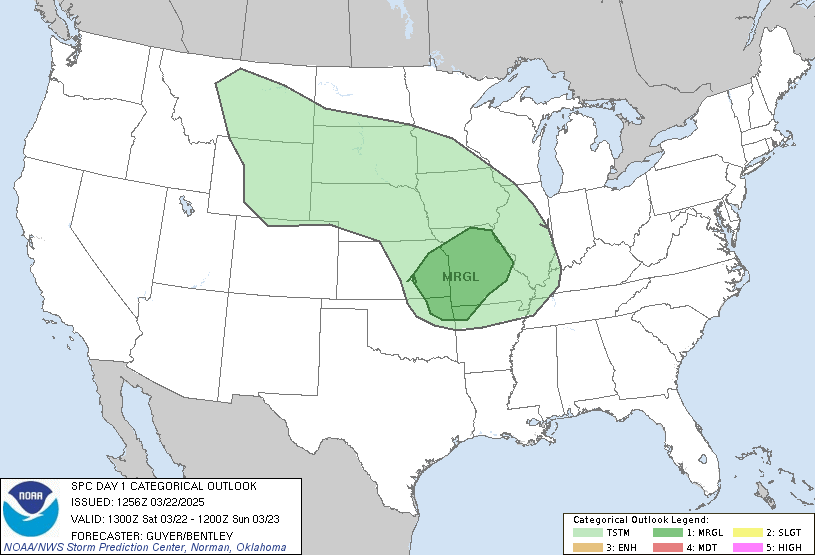
...THERE IS AN ENHANCED RISK OF SEVERE THUNDERSTORMS ACROSS PARTS OF
THE CENTRAL HIGH PLAINS AND CENTRAL PLAINS...
...THERE IS A SLIGHT RISK OF SEVERE THUNDERSTORMS ACROSS PARTS OF
THE OHIO VALLEY...
...SUMMARY...
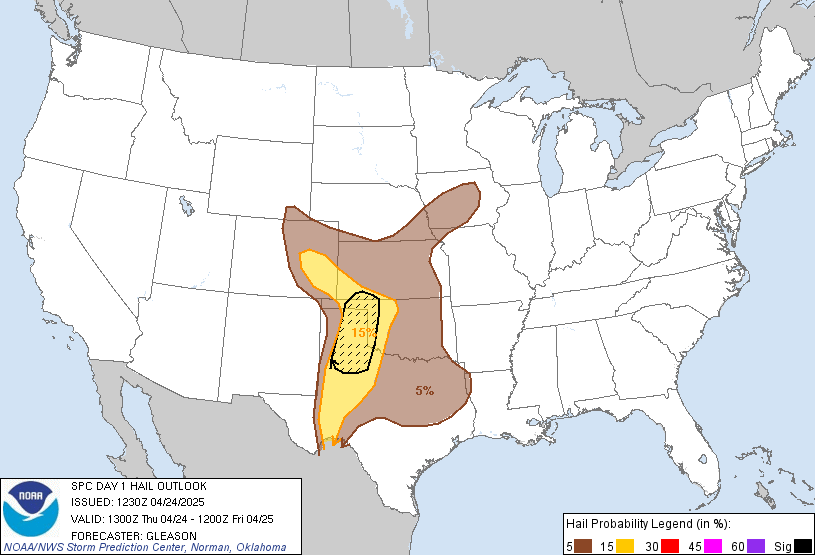
Severe thunderstorms capable of producing large to very large hail,
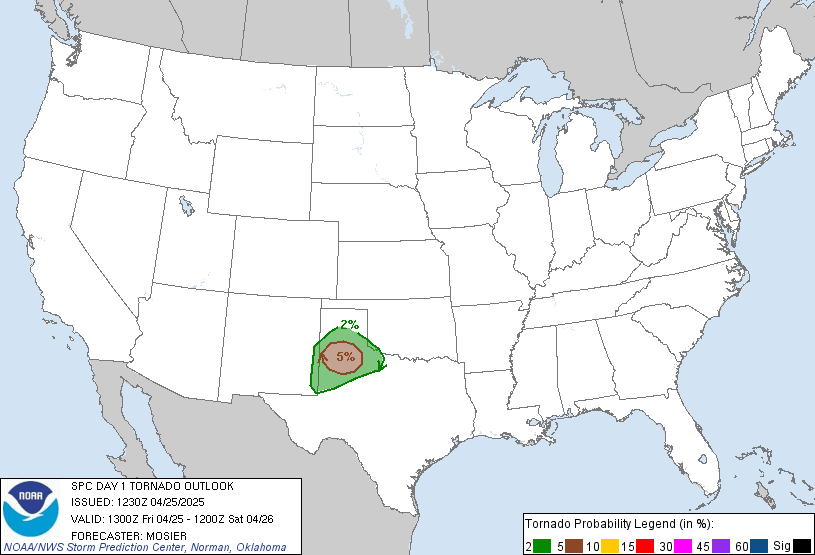
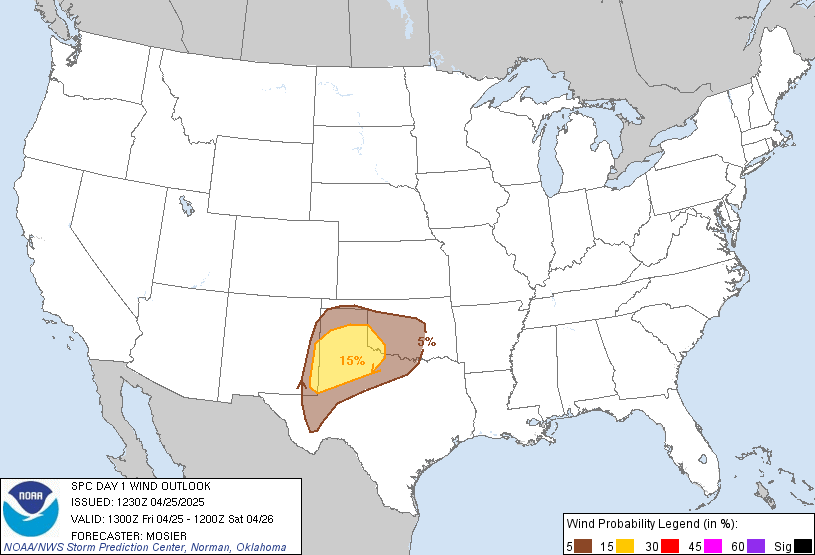
severe/damaging winds (some 75+ mph), and a few tornadoes should
occur this afternoon and evening across parts of the central Plains
into Iowa.
...Central High Plains into Mid MO Valley...
Recent surface analysis placed a low over southwest KS, with a warm
front extending through a low over far southeast NE to a third low
over southern WI. The low over southwest KS is forecast to fill
while another low develops back farther west across southeast CO
today. As it does, low-level moisture advection will persist across
the central Plains, while a deeper upper trough traverses the
Intermountain West. Combination of low-level convergence east and
north of the surface low and increasing large-scale ascent will
favor thunderstorm development during the late afternoon/early
evening across northeast CO. This initial activity is expected to be
supercellular, with large to very large hail as the primary risk.
This initial activity should be high-based, with strong downdrafts
resulting in a quick transition to a linear mode. Even so, some
tornado risk is still apparent, particularly with the southernmost
supercells that persist through the early evening when a
strengthening low-level jet will lengthen low-level hodographs
considerably.
Most guidance continues to suggest that an intense bowing cluster,
with significant wind gusts over 75 mph possible, will develop and
spread eastward along/near the warm front from along the southern
NE/northern KS border vicinity through the evening. Given the
organized nature of this line, it should persist throughout most of
the night, and an eastward expansion has been made to the Enhanced
Risk to account for increased probability of strong gusts into more
of southeast NE.
A separate area of intense thunderstorms is anticipated farther east
this afternoon/evening along/near the warm front. Given the ongoing
thunderstorms across northern MO, there is some question to where
the front consolidates this afternoon. Consensus within the guidance
places it from far southeast NE across southern IA, but there is
some chance it ends up a bit farther south in far northern MO.
Robust thunderstorm development is expected along this boundary this
afternoon amid strong low-level moisture advection and heating, and
persistent low-level convergence. Environmental conditions support
supercells capable of all severe hazards, including large to very
large hail (isolated 2"+ inches in diameter) and tornadoes, but a
messy convective mode and related storm interference could disrupt
updrafts and may limit discreteness. Tornado risk will be focused
along/near the front where backed low-level easterly winds may
locally enhance 0-1 km SRH. Some clustering is possible, with an
attendant threat for more damaging gusts wherever this clustering
occurs.
...Mid Mississippi Valley into the Midwest/Ohio Valley...
With the primary shortwave trough well west of the region, mesoscale
features will dominate the severe potential across the region today.
One such feature is the MCV currently moving through southeast MO.
This feature is expected to result in a localized increase in
mid-level flow along its eastern periphery as it progresses
eastward/northeastward along the OH River vicinity. Filtered heating
and/or outflow from the ongoing showers and thunderstorms could
result in a baroclinic zone ahead of this vorticity maximum from
north-central KY into far southern IN. Expectation is that ascent
attendant to the MCS coupled with low-level convergence along this
boundary will result in additional thunderstorm development this
afternoon.
The locally enhanced mid-level flow coupled with modest low-level
southerly flow should result in moderate vertical shear, with
effective bulk shear values from 30 to 40 kt. This is sufficient for
updraft organization, but the mixed boundary layer will likely
support strong downdrafts. The general expectation is for an early
mostly multicell/isolated supercell mode to transition quickly to a
more linear mode with one or more bowing line segments. Isolated
hail is possible early in the convective cycle, with a trend towards
more damaging gusts with time. Given the modest and veered low-level
flow, the tornado potential will be low, but the presence of a
boundary suggests that there remains a low-probability tornado risk.
...Southern High Plains...
Isolated thunderstorms may initiate this afternoon along the surface
dryline from southwest KS into the eastern OK/TX Panhandles and
western OK. While deep-layer shear will be weaker with southward
extent across the southern High Plains, a narrow zone of minimal
MLCIN along/east of the dryline may support isolated convection
capable of producing both locally severe hail and wind gusts.
..Mosier/Bunting.. 05/16/2026
Read more CHECK UPDATE ZOOM GRAPHIC
http://dlvr.it/TSZPCD