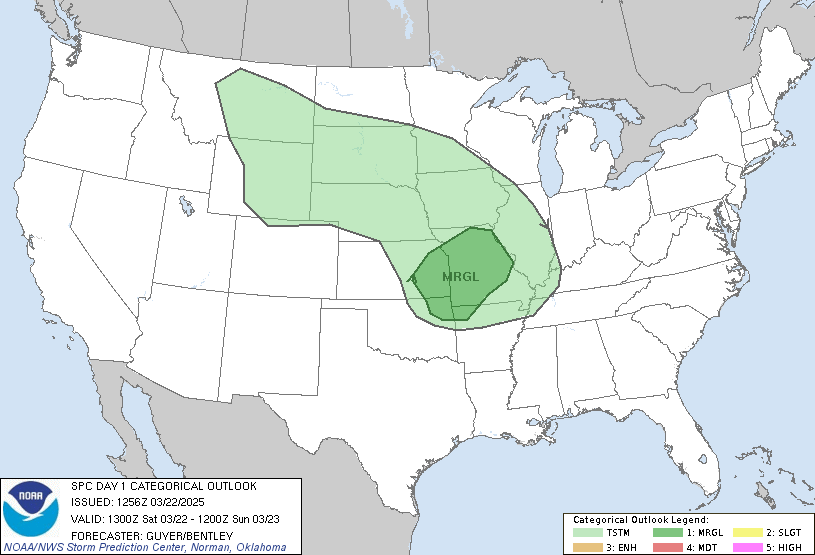
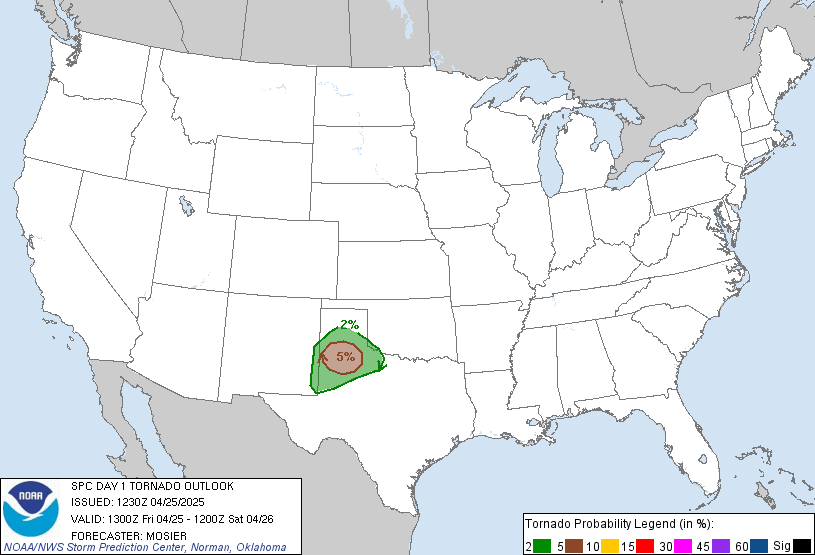
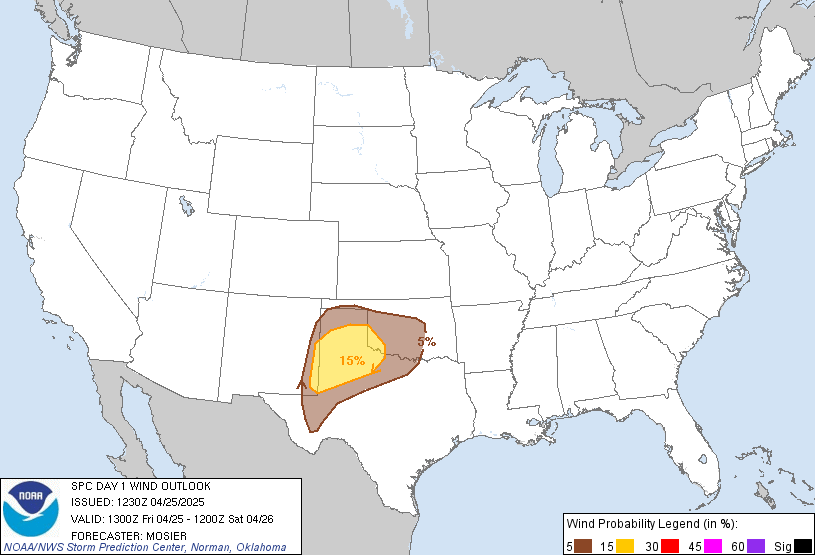
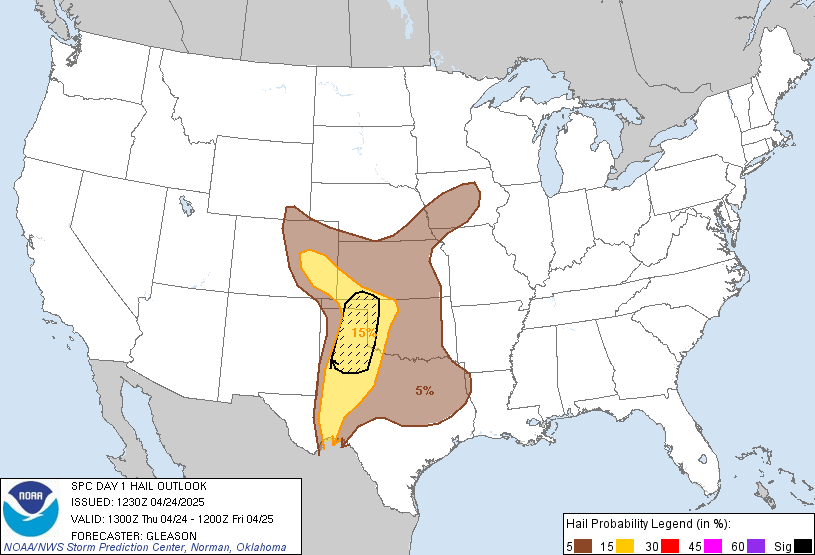
Day 1 Convective Outlook
NWS Storm Prediction Center Norman OK
0249 PM CDT Mon Apr 27 2026
Valid 272000Z - 281200Z
...THERE IS A MODERATE RISK OF SEVERE THUNDERSTORMS ACROSS
EAST/SOUTHEAST MISSOURI...SOUTHERN ILLINOIS...WESTERN KENTUCKY...AND
NORTHWEST TENNESSEE...
...SUMMARY...
Numerous severe thunderstorms are expected from the mid
Mississippi/lower Ohio Valleys into the Mid-South through this
evening, with a threat for multiple strong to intense tornadoes
(EF3+), widespread severe/damaging wind gusts, and scattered large
to very large hail.
...20z Update...
Only minor adjustments were made to extend the Marginal Risk back
into southeastern Kansas/northeastern Oklahoma to account for storms
initiating over the last hour.
The Moderate Risk remains unchanged with this update. The morning
MCS is now moving through eastern Illinois/southern Indiana. Further
west in Missouri and western Illinois, modifying remnant outflow
remains near the St. Louis Metro. Cumulus south of this boundary
across southeastern Missouri into southern Illinois, cumulus within
the warm sector is deepening. Increasing MLCAPE/steepening lapse
rates are nosing northward in southern central Missouri and
south-central Illinois.
Just to the west of the Mississippi River, radar shows occasional
attempts at initiation within the open warm sector. While the
details continue to evolve, it likely that a corridor of conditional
threat for strong-intense tornadoes will develop from the Missouri
Bootheel into southern Illinois/western Kentucky. Within this region
strong daytime heating has led to a volatile air mass, with moderate
to strong MLCAPE 2000-3000 J/kg and strong deep layer shear. VAD
profiles frm PAH (Paducah, KY) and LSX (St. Louis, MO) indicate a
rich SRH environment of around 200-300 m2/s2 in the 0-1 km layer. It
is likely that supercells capable of all hazards, including
strong-intense tornadoes, large to very large hail, and damaging
winds. Will develop across this region soon. See MCD571 for
additional information.
The conditional threat for strong tornadoes will extend as far south
as the Arklatex into portions of western Tennessee. Through time,
storm mode will shift to become linear with the southward moving
front, which will bring an increase into the evening of damaging
wind threat. Line embedded tornadoes, some of which may be strong,
will continue to be a threat into the evening.
..Thornton.. 04/27/2026
.PREV DISCUSSION... /ISSUED 1150 AM CDT Mon Apr 27 2026/
...Mid Mississippi Valley/Midwest into the Mid-South/Lower
Mississippi Valley...
Forecast scenario largely unchanged in that a very active
severe-weather/tornado day is expected regionally, especially into
late afternoon and this evening. Initially, a relatively long-lived
linear cluster of convection persists at late morning across
east-central/south-central Illinois, with additional initially
elevated storms on its eastern/southern periphery, moving from
eastern Illinois into Indiana, with severe hail and damaging winds
persisting as early day hazards.
Over time, air mass will continue to moisten and rapidly destabilize
along/south of the MCS-associated outflow from central Missouri into
south-central Illinois. A mid/upper-level trough will eject
northeastward from the northern/central Plains into the Midwest and
middle Mississippi Valley through the period. Low-level mass
response will encourage the primary surface low to consolidate
across Minnesota/Wisconsin by this evening, with a warm front
effectively delineated by the morning convection.
Strengthening west-southwesterly flow aloft associated with a 50-70
kt mid-level jet will overspread much of the warm sector by peak
heating, and a 35-45 kt south-southwesterly low-level jet will both
provide ample low-level and deep-layer shear to support supercells.
Initially discrete surface-based development appears likely to occur
into mid-afternoon across the mid Mississippi Valley/Mid-South ahead
of the surface cold front, and perhaps along weak low-level
confluence zones in the open warm sector including generally near
the confluence of the Mississippi/Ohio Rivers southward into the
Mid-South.
These supercells will exist in a very favorable environment for
tornadoes through the afternoon and evening, and multiple strong to
intense tornadoes (EF2/3+) appear likely, especially from parts of
Missouri into Illinois along/near the effective front. This strong
tornado potential will also likely extend farther south within the
warm sector into the Mid-South.
By early evening, convection will probably tend to consolidate into
clusters of supercells and then more linear segments with some
increase in damaging wind potential aside from large hail and a
continued multi-mode tornado risk tonight.
...ArkLaTex into Texas...
While storm coverage may trend lesser with southwest extent, the
potential for at least isolated intense storms will exist across the
region. Supercells capable of producing large to very large hail and
occasional damaging winds are expected. Increasing low-level
warm/moist advection tonight could foster additional robust
thunderstorms along the retreating dryline and eventually the
southward-moving cold front.
Read more CHECK UPDATE ZOOM GRAPHIC
http://dlvr.it/TSFrrJ